How Failing to Reach Our Goals Can Create a Downward Spiral of Shame, Self-Blame and Self-Judgment and How to Use a 4-Step Process to Get Back On Track

Have you ever set goals for yourself and had every intention of making them happen, only to find yourself getting completely knocked off track by something going on in your life?

If you’re like most people, then I’m guessing your answer is a resounding ‘YES!’

The question isn’t so much whether we’ll be knocked off track with our goals or not, the question is, when we do veer off course, what can we do to get back on track?

And for those of us with a history of childhood abuse or trauma, when things do go awry with our plans, when we face challenges and obstacles, it can hit us especially hard, sending us into a downward spiral of shame, self-blame and self-judgment.

New Year’s goals and intentions are no exception to this. When things do get off track, we can quickly spiral downwards into a funk that can sometimes take a long time for us to find our way back out of.

But when we learn to recognize our trauma patterns, and how they send us into those downward spirals, we can also use strategies and tools like Tapping to get ourselves out of them more quickly.

Let me explain what I mean, and then I’ll share a 4-part process with you that you can use to quiet your critical inner voice of shame, self-blame and self-judgement so that you can get back on track with any goals you’re trying to achieve now or in the future…


2020 has not quite gotten off to the start I was hoping for…

I don’t really set traditional goals, like ‘I want to lose 10 pounds’ or ‘I’m going to give up chocolate for 3 months’, but I do sit down and review my year. I take stock of what I did and did not achieve last year and then brainstorm where I want to focus or re-focus my energy this coming year.

And so, this year, I set some targets for different areas of my life including health, healing and well-being, fitness, finances, business and relationships.

Going through this process got me so excited for the days, weeks and months ahead. So, what happened? If I was so excited, why is it that I got so off-track so quickly?


I got really off track, really fast!

What happened was that my husband and three kids all got really sick. From Christmas Eve to New Year and beyond, they were all flat out with high fevers and coughs. I turned into honey tea maker and temperature-taker extraordinaire!

Just as soon as they began to feel a little better, our assistant and her family all got sick too. Without her help, which usually allows me  to work and parent with some sense of sanity, I found myself buried under piles of laundry, endless to-dos, grocery lists and school lunches.

Cramming all the household chores and tasks into my already full schedule of work and after-school kid’s activities, as well as planning for my son’s birthday right after new year, left me feeling more than a little overwhelmed, agitated, drained and frustrated.

Family always comes first for me and so consequently, I got off track with a bunch of my goals and intentions. My plans to hit the ground running in the new year went from a bang to a whimper!

Can you relate to this? Has your new year started smoothly or have you faced your own set of roadblocks? Maybe you planned to get your eating on track but ended up at a work convention for several days where you were endlessly surrounded with donuts and other less than healthy choices. Or perhaps you’d just begun training for a 5K or half marathon, only to find that you twisted your ankle on your first run and now you have take a break, leaving you way behind in your race preparations.


How a history of trauma affects our ability to achieve our goals…

So what does all this mean for those of us with a history of childhood trauma or abuse?

Like me, you may not be overly attached to setting and reaching goals. Logically you might understand that things inevitably get in the way at times – life happens! But the thing is, with a history of trauma, when we strive to better our lives, obstacles in our path can feel like the end of the world.

Those obstacles can remind us of back then. They can remind us of the negative things we were told, or told ourselves all those years ago that are often, unconsciously, still running the show today.

Perhaps you were ridiculed for having dreams as a child. Perhaps, when you told people about something you were working towards, you were bullied or it was taken away from you.

As children, we are naturally reliant on our primary care-takers for survival. In theory, at the very least, they are responsible for providing us with a roof over our head, food to eat and clothes to wear.

However, when these same care-takers are also the cause of pain and suffering in our lives; frequently denying us necessary love, care and attention, and creating blocks and obstacles in our path, it is easy to understand how and why a sense of hopelessness, powerless and futility can set in.

A child cannot survive on their own. In a very real way, they are powerless to change their situation. If a child is supported, nurtured and loved, they are likely to develop positive, affirming belief systems that will help them succeed in their life. They may believe and say things like: ‘no matter what life throws at me, I know I’ll always be ok’.

If however, a child is ridiculed and abused, the words they hear can tend to develop into a critical inner voice; a voice that constantly loops in their head.

Over time, negative belief systems are strengthened, creating emotional blocks that hold them back and keep them feeling stuck in their life. Characteristically, this child might believe and say things like:

‘I don’t deserve good things to happen to me, life will always be a struggle. Things just never go my way. What’s the point in even trying? I feel like such a failure.’

Unfortunately, for trauma survivors, the negative beliefs and patterns of hopelessness and futility that we faced back then, can still have a huge and often detrimental impact on our lives today. And particularly on our ability to face and overcome obstacles.

This is because, so much of our energy is invested in surviving. By its nature, survival energy is focused inwards, on playing small, on getting by. This is the very opposite of the outwardly-focused energy required for setting and reaching our goals; the energy of expansion and growth so necessary if we are to move forwards and really thrive in our lives today.


How does trauma affect your ability to achieve your goals?

Take a moment to think about your life right now. When you set a goal or intention and subsequently face an obstacle, do you find yourself digging deeper into your resilience and resourcefulness?

Do you brainstorm ways around the problem? Or, instead of taking challenges in your stride, do you feel stuck, paralyzed and unable to move forwards in your life? Do your negative thought patterns and beliefs start to run the show? Do you tell yourself things like:

‘See, I’m clearly not meant to do this’, ‘I’m just not good enough’, ‘who do you think you are?’, ‘the universe hates me and wants me to fail’, ‘If this was meant to happen for me, shouldn’t it be easy?’

I know at times I do!

So, what can we do? Yes, life happens and the challenges and obstacles that we face are an inevitable part of that life. But what if we don’t have to stay stuck in the old patterns of frustration, futility and overwhelm that have been running the show for so long? These patterns and beliefs may have kept us safe back then, but how can we break free from what is holding us back today?

To find out, I’m going to take you through a simple 4 step process that will help bring your awareness to what your old unconscious patterns, beliefs and blocks actually are; I’ll teach you how you can recognize and change these so that you can release stuck energy and move forwards more quickly and easily into the life that you want and deserve.


Step #1:

Learning to recognize the limiting beliefs, patterns, blocks (‘yes but’s’) that are keeping us stuck in our lives.

Think about an intention or goal that you recently set for yourself. When you set that goal, you were probably somewhat excited about it. But at the same time, you may have noticed a whole slew of ‘yes but’s’ pop up in your mind.

‘Yes but’s’ are a fantastic indicator of the push – pull that we can so often feel when a part of us wants to do something (in this case when we set and pursue a goal) but another part of us is afraid.

Write down your goal and your initial positive feeling or reasons for setting that goal. Then also write down any ‘yes but’s’ that came up for you.

An example of this might be:

GOAL:
This year I’m setting a goal to deliver 2 presentations per month at work. I will have to plan and deliver my talks in front of 50 plus co-workers.

Initial Positive Feeling:
Part of me feels excited to take charge of the direction of my career, with the potential for a pay raise and a promotion.

Yes But (limiting belief/pattern/block):
I feel scared. I don’t feel like I’ll do a good enough job. What if my co-workers judge me. What if I mess up my talks. Maybe I’ll be fired. Who am I to think that I could ever do this, let alone get a promotion or a raise? I should just stay doing what I’m doing. At least that’s familiar and safe.

Outcome:
Left un-checked, the ‘yes but’ will always win. This is because SAFETY always comes first in order to ensure our survival, especially for those of us with a history of childhood abuse or trauma.

So often, when it comes to setting and achieving our goals, this push-pull of opposing beliefs is what leads to us feeling overwhelmed, hopeless, powerless and futile. Essentially, the desire to grow and the desire to stay safe cancel each other out, resulting in stagnation and feeling stuck. It’s like pressing down on the brake and the gas in the car at the same time. There is a whole lot of power and energy being used, but we’re not getting anywhere fast.

We may be excited about our life and our goals, but unless we can recognize our underlying, unconscious limiting beliefs and patterns, we may never reach those goals. What we will find instead is excuses that sound like extremely valid reasons for continuing to play small in our lives. We will likely procrastinate until we eventually give up.

Unless….


Step #2:

Letting go of the self-blame, judgement and shame: understanding that your old patterns of behavior are not your fault.

Now that you have begun to understand a little bit about the underlying patterns and beliefs that have kept you safe for all these years, it’s time to begin to release the self-judgement, blame and shame that can contribute to keeping us stuck.

First of all, it’s worth saying that sometimes circumstances beyond our control do play a big part when we face blocks or obstacles on the road to achieving our goals.

In my case, my family all got sick. Perhaps something similar has happened to you. We cannot control other people and we cannot control the weather or other external circumstances. This may sound silly, but I have in the past blamed myself for bad weather! 😉

Another important thing to understand is that safety is a hard-wired human need. Our reptilian brain (the part responsible for ensuring the survival of the human race) will do anything to keep us safe. That usually does not include growing and striving towards goals. In addition to this, when we have a history of abuse or trauma, very often, we may have been told or shown that our needs and desires are unimportant or do not matter at all.

Understanding that we have patterns and beliefs running that we may not even be consciously aware of can help ease the pressure and failure that we can sometimes feel.

The abuse we experienced was not our fault. The traumatic experiences we lived through or witnessed were not our fault. But, if we are ever to move from a life of surviving to fully thriving, it is now our responsibility to challenge those old beliefs. We can begin asking ourselves questions like:

‘Is it really true that I don’t deserve anything good to happen to me?’ ‘Does my life really have to be such a struggle?’

If none of this was your fault, if you could let go of some of the shame, the self-loathing, the judgement, what would be possible for you and your life? You cannot change what has happened to you, but you do get to choose how you move forwards in your life today.


Step # 3:

Getting in touch with how we feel and where we feel it in our body:

Now that you’ve identified a goal and the push-pull of the positive excitement and the ‘yes but’s’, and you’ve understood (at least consciously) that the beliefs, patterns and blocks you face are not your fault, it’s time to tune in to what you’re really feeling.

What does this mean?

Well, when you think about reaching the goal you wrote down in step # 1, first of all notice the positive feelings or sensations that you get in your body. Perhaps you feel fluttery excitement like champagne bubbles in your belly. Perhaps you feel an open feeling in your chest and you notice that your shoulders feel a little less tight than they did a couple of minutes ago.

Now, just for a moment, focus on the ‘yes but’s’ that you also wrote down. Maybe notice any fears that came up for you. As you bring your attention and awareness to these ‘yes but’s’, notice what happens inside. What is your ‘felt-sense’ experience? Do you get a sinking feeling? Do you feel any constriction in your jaw, throat, chest or legs? Do your shoulders sag?

Whatever you notice in your body is not wrong or right, it is just the truth of how you feel.

At the same time, see if you can become aware of any negative self-talk or any feelings like frustration, futility, overwhelm or hopelessness. Very rarely are we taught to pay attention to what we are feeling in our body.

With a history of trauma it’s extremely common to dissociate and stay very far away from our body and our feelings. But, with just a little tuning-in and attention, we can begin to notice a whole wealth of information that is key to releasing the blocks and limiting beliefs that have kept us from achieving our goals and kept us feeling stuck in our life, until now.


Step #4:

Tapping to release blocks to our success, so that we can live the life we want and deserve!

Before we begin to Tap, let’s review:

1) Write down your goal.

2) Notice any initial positive feelings or excitement about reaching this goal.

3) Notice any ‘yes but’s’, limiting beliefs or patterns preventing you from reaching your goal.

4) Acknowledge that these patterns are not your fault – consciously begin to release shame and self-judgement.

5) Notice what you feel in your body and where you feel it.

Now that you’ve reviewed the previous steps, it’s time to Tap.

Tapping Script:

How to use Tapping to release judgement, shame and self-blame around our ability to reach our goals. Letting go of old patterns and beliefs so that we can move forwards in our lives today.

Take another moment to check back in with the previous step. With your goal in mind, notice the push-pull energy in your body. Allow yourself to become aware of both the excitement and also any ‘yes but’s’. You might become aware of overwhelm, frustration, fear etc. Notice where you feel this in your body. On a scale of 0-10, rate how strongly you feel that feeling or emotion. You might observe something like:

‘When I think about my goal, I feel excited about it. I feel this in my face as I start to smile. But then doubts creep in like a cold, dark seeping feeling in my gut. I feel frustrated at a level 8 and there is so much tension in my arms. It feels like I want to punch something. My jaw is clenched and I want to scream.’

Keeping this in your mind, take a deep breath in as we begin to tap:

Karate Chop Point: (Setup Statement)

1) Even though I’m having all these doubts about my ability to make this goal happen for me, I know I’m a good person anyway.

2) Even though I feel so much futility when it comes to reaching my goals, and I’m not sure how to trust myself because I’m always starting new things and then stopping again whenever an obstacle blocks my way, I choose to remember that I’m doing my best right now.

3) Even though I feel like such a failure because I’ve gotten so off track from where I want to be and reaching my goal feels so impossible right now, I know that I’m ok anyway, just as I am.

Now move on to the Tapping Points:

Top of Head (TH): I feel like such a failure
Eyebrow (EB): Why is this so hard for me?
Side of Eye (SE): Everyone else seems to manage to set and reach their goals just fine
Under Eye (UE): What the heck is wrong with me?
Under Nose (UN): I feel so ashamed of myself for getting so off track again
Chin (CH): I feel this sinking feeling inside when I think about my goal
Collar Bone (CB): I just don’t understand what I’m doing wrong
Under Arm (UA): I was so excited to do this

TH: I know it’s what I want
EB: Well, at least, a part of me feels like reaching this goal is what I want
SE: But another part of me does feel afraid
UE: What if I fail?
UN: What will people think of me then?
CH: I’m scared of how people will judge me if I can’t do this
CB: I thought this was what I wanted to do
UA: But what if it’s not?

TH: What if I’m just not meant to do this?
EB: Who am I to do this anyway?
SE: But I do want to do this!
UE: I feel so many mixed emotions and feelings about this
UN: I feel so overwhelmed and I don’t know where to start
CH: This pattern feels so familiar to me
CB: I set a goal and I get excited
UA: I make some progress and I really want to succeed

TH: But then something always gets in the way
EB: I feel so much futility about this familiar pattern right now
SE: Why does this keep happening to me?
UE: It’s like the universe doesn’t want me to succeed.
UN: If I were really meant to do this, wouldn’t it be easier?
CH: Shouldn’t it be smooth?
CB: Ugh, I feel so hopeless right now
UA: I should just give up on this dream, this goal

TH: I feel so pathetic right now
EB: But what if this is not my fault?
SE: What if this is just an old pattern that I’m running?
UE: What if my unconscious brain is just trying to keep me safe?
UN: Sometimes things just happen that knock people off track
CH: But what if it’s not unique to me, what if this doesn’t have to mean that my dream, my goal is over?
CB: What if I get to choose now?
UA: But I didn’t get to choose back then

TH: Back then everything was out of my control
EB: But I survived all that and now it’s my turn to take control
SE: I give myself permission to try again
UE: I give myself permission to pick myself back up
UN: I used to believe that if I got knocked off track then it was just not meant to be and I should just quit.
CH: But now I’m open to the idea that that might not be not true
CB: I see and understand these old patterns and beliefs now and how they’ve kept me safe
UA: I’m so ready to go beyond just surviving now

TH: I choose to acknowledge that I deserve to thrive
EB: It might not be easy
SE: There will be blocks and obstacles along the way
UE: But I choose to tap in to my resilience and my strength
UN: I refuse to be held back by this any longer
CH: Thank you old patterns and beliefs for keeping me safe
CB: But I’ve outgrown you now and I’m choosing a different way
UA: This is my time

TH: My time to heal
EB: My time to thrive
SE: My time to really live
UE: I choose to follow my dreams and pursue my goals no matter what obstacles I face
UN: What if getting knocked off track is just a normal part of life
CH: And doesn’t mean that I’m a failure
CB: I’m letting go of that old belief, that old story
UA: I see now that it’s no longer serving me

TH: I choose to release the self-blame and judgement around why I got so off track
EB: letting go of all the mean and cruel things I’ve been saying to myself
SE: I choose to allow myself a little space to breathe
UE: maybe it’s normal to get off track
UN: But I don’t have to stay off track
CH: I don’t have to quit
CB: I allow myself to see every minute and every day as a new chance to start again
UA: It’s not too late

TH: I choose to breathe in to my strength
EB: I can do this
SE: I give myself permission to do this
UE: I’ve played small for long enough
UN: I’m safe enough to move forwards in my life today
CH: I choose now to release any remaining feelings of overwhelm
CB: So that I can break my goal down in to tiny manageable pieces
UA: I can do this step by step, bit by bit

TH: I can release my fears around this, knowing that I’m ok anyway, just as I am
EB: I have nothing to prove
SE: I’m doing this for me
UE: This is my life and I get to choose
UN: I didn’t get to choose back then
CH: But things are so different now.
CB: I’m different now
UA: Releasing any remaining feelings of hopelessness, futility and shame

TH: I can see my path clearly now
EB: I choose to allow myself to stay focused on the end game
SE: It might not be a short game
UE: But I can do this
UN: I am doing this, little by little, step by step
CH: Letting go of any residual old patterns and beliefs
CB: I see myself reaching my goal
UA: I believe in me, and that feels like a relief

Now that we’ve Tapped, go ahead and take another deep breath in. Take a moment to check in with where you are right now. How is your body feeling? How has what you were feeling at the beginning shifted? Are you aware of less constriction? Or a greater feeling of expansion or lightness? Do you feel more free? More hopeful?

Check in with whatever is present for you right now. Take a look at where you were when we started this Tapping. If you began at an 8 or 9 of futility or overwhelm, perhaps that number has moved down a bit or maybe it has cleared entirely and another layer or topic has come up for your attention. There is no right or wrong answer. 🙂

Please let me know in the comments below if this Tapping was helpful for you and how you’re doing now. And as ever, if you need support or want to work with me one-on-one as your coach, click here to contact me or here to schedule a session today.

Wishing you peace and joy as you continue your journey and follow your dreams.

Karen 🙂
The Simple Process That Will Help You Avoid Burnout and Find Balance & Happiness Now, Even During Your Healing Journey…

No matter what type of trauma you’ve experienced, whether physical, verbal, emotional or sexual, and no matter what symptoms you’re still dealing with today, if you’re anything like me, then you REALLY want to heal!

And, if you’re like me, sometimes that desire and drive to heal can become all-consuming; a little frantic, a little desperate; simply put, it can take over our lives.

It’s easy to think ‘If I can just fix this one thing, then I’ll be able to move forward with my life,’ or ‘If I can just release this trauma, then I’ll be happy.’

But what I’m going to tell you right now is something you need to hear, and something that I’ve struggled to understand and more importantly, feel as I’ve gone through my own healing journey…

You do not need to heal all of your trauma
in order to feel good and enjoy your life today.

If you’re like me, you may logically understand this, but emotionally your brain may be constantly searching for how release your trauma and heal, especially if you’ve gone down the path of self-help and therapy work.

I know this is easier said than done. Because the truth is that, no matter how hard we might try to contain or compartmentalize it, trauma affects all aspects of our lives from our health and well-being, to our relationships, our weight, our finances and so much more.

And because of this, we can sometimes feel like we can’t escape our trauma. Nothing is un-colored by the traumatic lens through which we view our lives. We are constantly bumping into and being bombarded by triggers and reminders.

And so what I’m going to share with you today, is a simple process that can be pivotal in helping you find joy, balance and happiness in your life TODAY as you go through your healing journey.

Remember, the healing journey is about balance. Like exercise, there are days to push ourselves and go deep into healing, and there are days to rest and just be. This exercise will help you to find and create that balance.

So go ahead and download this PDF by right clicking and ‘saving’ here and then we’ll go through this process together.

It will be extremely important for you to fill out and keep this PDF readily available! 🙂

But before we get into that, let me give you some context…


Down the rabbit-hole of healing – What happens when you try to heal too quickly…

When we get triggered, when we veer into a downward spiral, it can sometimes spur us on and push us harder in our healing endeavors. This can be good and bad.

There have been many times when I have found myself going down the proverbial rabbit-hole of healing. Usually it’s because I’m in a dark place, because of something triggering me.

From this dark place, I’ve been known to book double SE sessions, work with a body worker, receive energy work, do Tapping, journal and more, all in the space of a week.

What I am not consciously aware of when I’m down the rabbit hole – when I go into that mental space – is that I’m running my ‘If I can just heal, or fix this one thing, then I’ll be happy’ or ‘I’ll finally feel safe…’ pattern.

Far from making me feel better, or speeding my recovery, my relentless – hit it from all angles – approach has at times actually hampered, slowed and sometimes stopped my healing process altogether – driving me deeper into despair. The very opposite of what I’m striving to achieve!

You see, sometimes when we’re triggered; when our nervous system is in the stress response states of fight, flight or freeze, our pre-frontal cortex is not online. We are not able to make rational choices or decisions about the direction of our healing journey. It can feel like we’re in a blind panic and like we will do anything to just feel better.

But, the more we push and force our healing, the harder it becomes. We stop allowing time for proper integration and absorption and eventually this can lead to stagnation, futility, burn-out and even quitting altogether.


How to Avoid Healing Burn-Out…

So the question is, what can we do differently? How can we avoid burn-out? How can we pull ourselves out of a downward spiral? And is it really even possible to take a more balanced approach to our healing journey?

The first thing we need to understand is that all humans have an in-built tendency to hone-in on the problems in our lives. Most people run the ‘ostrich with its head in the sand’ pattern of avoiding their problems and doing everything they can stuff down their emotions and feelings, but that of course does not make them go away.

Other people, like you, are courageous and seek out healing, knowing that more is possible for their life. The only challenge with this is that oftentimes we can become overly fixated on our perceived problems and how to ‘fix’ them.

For example, any time my husband and I would run what I call our ‘intimacy pattern’ (more on that in another post) I would spiral into believing it was all my fault, frantically trying to ‘fix myself’ using all those different healing modalities. Desperate to heal my pain and suffering and avoid future suffering too.

In order to avoid burnout, it’s essential, when we are not actively journaling, or tapping, or doing any other kind of healing work, that we be doing everything in our power to bring our brain towards the positive in our lives. Towards what is going well and towards emotions such as empowerment, happiness and joy.

Easier said than done right? The activity we’ll do below, with this PDF, will help you get there.

But first, why is it that we get stuck on the negative? Why do we have the tendency to hone in on the problems in our lives and why is the desire to ‘fix’ these perceived problems so strong and compelling?


Plain and simple… human brains are hard-wired to find the negative.

We are experts at finding what’s wrong. Long ago, this ‘negativity bias’ was an essential part of the survival and evolution of our species.

In early human history, paying attention to bad, dangerous, and negative threats in the world (like a tiger prowling in the bushes) was truly a matter of life and death.

The more attuned a person was to the dangers and bad things around them, the more likely they were to survive.

Although we no longer need the constant high-alert of our early ancestors in order to survive, the negativity bias is still central in how our brains function and operate.

This Negative bias can be especially strong and challenging for those of us who’ve experienced childhood, developmental trauma or abuse. When faced with threats, danger, punishment, assault, gas-lighting, narcissism and many other forms of abuse, we are all the more likely to fixate on finding what’s wrong in any given situation. The lack of safety and high levels of fear combine to form high levels of stress hormones and hyper-vigilance.


How to Find Balance During Your Healing Journey…The Positive Shift Sheet

So how do we go about shifting away from this negative bias and prevent it from taking over our lives? How do we avoid the downward spiral and make it so that we can both heal and not get consumed by our healing journey?

We can do this by finding balance between going ‘into the stuff’ in our healing journey, (when we tap, journal or work with a professional) and connecting with the positive emotions such as joy, happiness, excitement and gratitude that allow us to feel empowered and move forward in our lives.

The challenge is that when we’re ‘in the stuff’ it can be really difficult to find or notice anything good. When we’re in the middle of a downward spiral, it’s almost impossible to be resourceful in the moment. This is why I’m inviting you to fill out your ‘Positive Shift Sheet’ today. If you can fill in this sheet and keep it in an easily accessible place, then whenever you’re in need, you can pull it out and look at it. It will help you find and remember the good stuff and get you back to more positive and resourceful emotions whenever the negativity bias is taking over your brain.

That’s not to say that you shouldn’t feel your feelings or be with grief, shame, fear, anger or any other emotion or sensation that you’re feeling. Let me be clear, I think it is essential for your healing that you DO spend as much time as you need processing all of the emotions, memories, sensations and anything else that is present for you. However, for long term healing work to be truly successful, we do need to strike a balance.

When you are Tapping, Tap. When you are journaling, journal. When you are grieving, grieve.

AND you can also take breaks. It’s ok to pause to re-group and re-charge. It’s ok to have trauma AND be happy. It’s ok to feel lonely AND have fun. It’s ok to feel angry AND take a bubble bath. You get my point! 🙂

As you go through this process, remember…

There are two things that can dramatically shift how you feel in any moment…What you choose to focus on and the meaning you give to experiences in your life, both past and present.

Ready? Let’s go…


Step # 1 – FINDING THE GOOD IN YOUR PAST…

Do you long to feel healthier, happier, more whole and more healed? But yet, you fixate on what’s wrong with you and your life. So often people think, ‘I’ll be happy WHEN I’m healed. I’ll be happy WHEN I get that raise, my life can start WHEN.… I’ll find love WHEN…but the truth is that you DO NOT have to wait to he healed to create a better life, a life you love.

The first step in this process is to write down what has gone well in your life in the past.

By beginning to draw our attention away from only focusing on our trauma and what has gone wrong in our life, we can begin to re-build a stronger foundation for the life we want to create today.

If you’ve experienced trauma, it is likely that when you first begin this list, you may struggle to come up with many (if any) good things from back then. But please don’t give up. No matter how tiny, if you keep looking with an open mind, you will find some things.

THINGS I APPRECIATE ABOUT MY PAST (could include things like):
-I made good friends in college and I’m glad I still keep in touch with them.
-I’m so glad I had my kids young because now I get to enjoy my relationship with them as adults
-I was very good at sports as a kid and it taught me a lot about discipline and staying healthy as I get older.
-I liked to paint as a kid and I was pretty good at it. I won an art show when I was 8.


Step # 2 – WHAT IS GOOD ABOUT MY PRESENT LIFE TODAY?

Focus on what is good in your life right now.

Just as you wrote down your list of things you appreciate about your past, repeat the same process, this time for the things that you appreciate about your present life today.

This will build your sense of accomplishment and satisfaction with your life. Yes, there may still be a long way to go and things you need and want to heal, but making this list will become a go-to resource to help you out when you’re in a downward spiral. This list might include things like:

-My body is a healthy weight
-I enjoy my career
-I like my circle of friends and I make an effort to see them often
-I make enough money to travel 3 times a year and that makes me very happy because I love to travel to new places


Step # 3 – WHAT AM I CURIOUS ABOUT AND EXCITED TO EXPERIENCE IN MY FUTURE?

Part of the process of pulling ourselves out of a downward spiral is our ability to create a compelling future for ourselves.

If we are feeling hopeless, lost and futile and we can’t think of a single good thing to say about our lives, we are unlikely to be able to get out of a dark place very easily.

When we are depressed and even suicidal, it’s as if we have tunnel vision. Our world retracts and we shrink.

But, when we can open up our imagination and give ourselves permission to begin to dream again, we can begin to counter-balance the negative bias that has been running our lives for so long.

You may have been told (or told yourself) that it’s pointless to dream. That it’s not safe or realistic and that dreams don’t come true. But this is a trauma response. When we can dream, when we can set goals, when we can imagine the life we want and deserve, then we can begin to build our way towards it. There is freedom in this process!

Your future list might look like this:

-Now that my kids are getting older, I’m excited to be able to connect with them as adults
-I’m going to double my income in the next 12 months
-I have a massage booked for next week and I can’t wait to let the tension in my shoulders go
-I’m going to get my body into the best shape of my life in 2020!


Step # 4 – MY HAPPY LIST

Your ‘happy list,’ simply put, is a list of things that make you happy. Maybe for you it’s going for a long walk, or listening to a particular podcast, or reading a great book, or calling a friend. Whatever it is for you, take a moment to notice what things make you happy and write them down.

Your happy list is about helping you find resources ahead of time (when you are feeling resourceful) so that when you need it, it’s there. Your list might include things like:

-I love dancing around my kitchen while I cook dinner
-I really enjoy coloring mandala coloring books
-I like going swimming
-My favorite place to walk is with my dog in the park by my house
-I love brushing and snuggling with my dog
-I like drinking hot cocoa and herbal tea
-My favorite friend to chat with on the phone is Sue – her number is….

The National Suicide Prevention Lifeline

On a side note – if you are feeling depressed, you might want to add a list of support contacts to this section. These contacts are people you can call who will give you the support you need. You might want to include your best friend, your therapist, colleague or other professional. If you are depressed or suicidal, please reach out for support. You matter. The National Suicide Prevention Lifeline is:

1-800-273-8255


Step # 5 – VALUES AND BELIEFS THAT ARE SERVING ME WELL

It’s not something most people are taught, but learning to recognize and appreciate the good values and beliefs

that we hold; the good things about YOU, is an essential part of pulling ourselves out of a downward spiral.

Even if we’ve been conditioned to think that we’re a terrible, worthless person – perhaps we were told this explicitly or shown this implicitly – it is still possible to find a few good things about ourselves.

Not only does this counteract the negative beliefs we may have unconsciously taken in such as ‘I’m a bad person, I’m not worthy of love, I hate everything about me’ , but it also enables us to begin building a new post-trauma identity for ourselves.

We cannot change what has happened to us. The events will always be the events. But we can change how we feel about ourselves. And as we build a new identity, we will be in a much stronger position to pull ourselves out of a downward spiral.

Your values and belief statements might include things like:

-I am a kind and caring person
-I am a good listener
-I am good at baking
-I am honest
-I am good at keeping appointments and getting to places on time.

Now that you’ve seen the sample ideas I’ve given for each of these 5 steps, it’s time for you to fill out your own (if you haven’t already).

Print out a copy of the pdf here and get writing! 🙂

Please know that this process will never be perfect. You will have ups and downs. Healing is messy and confusing at times. But with these 5 tips and your completed pdf sheet, you are now well equipped to pull yourself out of any downward spiral!

As ever, I’m here for you if you need support, or if you have any questions. Please email me or click here if you’re like to take your healing journey to the next level by setting up a free healing consultation.

How to Get Through Thanksgiving When You Have a Background of Trauma

For those of us with a trauma background, our gratitude on Thanksgiving must be tempered with a very real acknowledgement of our trauma and our pain.

Don’t get me wrong, I think gratitude is awesome. BUT when you have a history of emotional, physical and sexual abuse or trauma, a major holiday that centers around family, like Thanksgiving… can be massively difficult.

Just like any holiday or significant date such as a birthday or anniversary, Thanksgiving can bring up all kinds of trauma responses for us. Going back home to spend time with relatives; perhaps going back to the location where your trauma took place, or being with the people who caused your trauma in the first place, can illicit a trauma response no matter how much healing work you’ve done.

Everywhere we turn there are so many expectations, rules, traditions and rituals about how we ‘should’ feel and how the day ‘should’ go. Even if members of our family have been abusive to us (now or in the past), we may still hold on to the notion that we ‘should’ get along with our relatives. We may feel obliged to have civil conversations over dinner, even though on the inside we feel like running away or screaming.

Which is why I recorded the above video to hopefully help you to get through the holiday season if you struggle with being around your family. 

But before you watched (if you haven’t yet) let me share two thoughts about this holiday:

#1 – Yes, be grateful.  Be grateful for all the good things in your life.  For your health if you have it, and your friends if you have them, and your children if you have them, or whatever else you CHOOSE to be grateful for.

But you do NOT need to be grateful for any people in your life that have hurt you in the past, or who continue to hurt you now.  Just because somebody is family, or just because they played an important role in your life, does not mean that you have to be grateful for them in any way.

#2 – Acknowledge the truth of how you’re feeling.  Thanksgiving is the holiday of stuffing turkeys, not stuffing emotions.  Don’t stuff everything down just to get through.  This may have been a survival pattern until now, but it’s time to be really honest with yourself. Acknowledge it if you’re feeling angry, or hurt, or sad, or abandoned, or lonely, or scared, or whatever else you’re feeling.  Acknowledge it, sit with it, tap on it, and do your best to release it so that it no longer has power over you.

Louise Hay used to say that ‘if you want to clean a house you have to see the dirt’. The same can be said about Thanksgiving.  See the dirt of how you’re feeling so that you can tap on it, release it, and finally free yourself from the invisible bonds of trauma that bind you to those who hurt you.

The reality is that maybe you can’t avoid seeing those relatives, but you can work to release the triggers you feel around seeing them and reduce the impact they have on your life today.

OK, ready to tap with me?  Press play above to start Tapping now. 🙂

And…. WHAMM! How Trauma Triggers Knock Us Off Course And What We Can Do to Get Back On Track Faster…

I had so many exciting plans for this week. Plans to reach some new fitness goals. Plans to be super productive with my work. Plans to meet up with some girlfriends. But  then… WHAMM! A trauma trigger knocked me off course and all my plans got derailed.

Sometimes a trauma trigger can be obvious but sometimes, like this week, it can be subtle and really hard to spot.

All I knew was that something was that something felt off this week.  Futility and self-blame had set in. I skipped workouts, missed my writing deadline and spiraled into a quagmire of darkness.

I couldn’t figure out what was bothering me or why, until today.

All week long I felt like I was dragging my feet. Everything felt like a chore. Getting out of bed in the morning took a Herculean effort. Working out at my usual 6am was almost impossible and when I did manage to drag myself from under the covers, I half-assed every workout.

I kept trying to put my plummeting mood down to external circumstances; The weather had been really dank and grey. My daughter was home from school with a nasty cold, again. She’d been keeping me up all night for days and I was extremely sleep-deprived. My dance teacher was still on vacation and I’d been really missing my lessons. But even cumulatively, none of these things were enough to justify the amount of futility and self-blame that I had begun to feel.

I was triggered and I forgot to use Tapping!
So how did I finally figure out what was getting me down? Did I stop to tap or journal or to sit and notice my feelings or body sensations? Honestly, no, for most of the week I did not!

I tried to brush it off, making the excuses we’ve all used at one time or another, like ‘I’m too busy to tap, it’ll pass soon, I’ll feel brighter tomorrow, I just have to keep pushing through’.

But the more I pushed the worse things got. The more I tried to ignore how I was feeling, the more bad things seemed to happen; the more I blamed myself for those things and the worse my futility became.

I blamed myself for everything from my cold-ridden daughter missing her dress-rehearsal at ballet to having to cancel my girl’s night out and everything in-between. It felt like there was no point in even trying when everything was going against me.

The turning point came when I tried and failed to get a workout to live-stream in our exercise room. My husband was passing through the room at the time and overheard me yelling at the tv:

‘Oh for fuck sake, the Universe hates me!! God clearly does not want me to do a workout.’

Now, this might sound dramatic, but it was the ridiculousness of my words that finally broke the pattern I had been running. Clearly something more was going on and it was way past time for me to stop pushing, to sit down and be with it. And so I did.

What I finally realized was that I’d been triggered. But by what?

What Was Your Experience Like?

Have you ever had an experience like this? Chances are that if you’ve experienced trauma like me, then you can relate to being triggered! Perhaps you’ve had an experience where you knew that things just didn’t feel right but you couldn’t work out why? Maybe you suddenly felt cranky, agitated or argumentative for no apparent reason? Or maybe you suddenly felt like needed to leave a restaurant or other public space or took an instant dislike to someone? Or perhaps you suddenly felt waves of grief, depression or futility that you just couldn’t shake?

So what can we do when this happens?

The first step is recognizing that we’ve been triggered in the first place. This is not always very easy to do.

Especially because by its very nature, a trigger is something that sends our nervous system into survival mode; the fight, flight or freeze states, and from these states we aren’t as resourceful or able to see things clearly.


How to identify a trigger…

While everyone and every nervous system is unique, there are some commonalities that can help us in this process. Identifying our triggers is truly a matter of exploration and curiosity.

We have to become aware of our physiological responses as well as our emotional responses to things around us. That means noticing if our heart-rate suddenly sky-rockets or pausing if we suddenly get very angry or depressed. It’s also about noticing any significant changes in our behavior.

For me this week, I could have spotted so many clues (had I been willing to pay attention!) When I did finally decide to stop running from my feelings, dissociating and pushing through, it became abundantly clear to me that I had indeed been triggered.


When we recognize that we’ve been triggered, we have to play detective…

Notice what might have happened to trigger you. When did your behavior or how you felt change? Was it a particular event or conversation perhaps?

If so, you can replay the situation slowly and carefully in your mind going over everything that happened (be aware that dissociation or re-triggering may occur and if it does – ground, ground, ground).

Pay close attention to the details. Notice where you were and who was around you. Were there any specific sounds or smells that made you feel uncomfortable?

Then, explore even further: what happened next or changed in the situation to make you feel triggered? What or who did you see, hear, smell, taste, touch or feel?

Identify: what was the actual trigger? And then what happened inside of you (what did you feel eg panic/dread/fear)? Naming any changes you can remember will really help you to identify and work with a trigger with the intention of calming your nervous system.

Lastly, see if you can connect what happened or how it made you feel to a situation from a past traumatic event.


My story…

For me, the process went like this:

I realized that I was having an intense over-reaction to the tv not working. I back-tracked to what had happened right before I started feeling futile and depressed and started blaming myself for everything.

I remembered that for the very first time, we had had a non-family member sleeping over at our house. We had hosted a party for our oldest son’s soccer team at the weekend. One of the kids stayed over.

I remembered telling my husband that I felt unsafe with the kid staying in the house. I remembered thinking that it was odd for this to bother me because what could possibly be threatening about a 10 year old child?! I also remembered worrying profusely about my daughter’s safety. I could not sleep and felt very on edge all night long.

By Monday, I felt drained and exhausted but consciously, I had forgotten all about the sleepover. This is why triggers can be so challenging and confusing. You see, I had had these awarenesses at the time of the sleep over, but it was a full 5 days later that I finally put all the pieces together.

It was only when I finally convinced myself to sit down and pay attention and tap that I was able to connect the sleep-over trigger with the extreme lack of safety that I had experienced growing up back then. I had been triggered by this child and this sleepover, but it was not about now!

It was about the danger that he and the sleepover represented to my nervous system. What I was being reminded of was a time of massive instability, uncertainty and fear coupled with the inescapability of frequent, sexually abusive house-guests.


I had been so afraid for my daughter not because she was in actual danger, but because the triggered part of me felt that I couldn’t keep her safe, just like no one kept me safe back then.

The moment that I had this awareness I felt immediate relief in my nervous system. The dread and terror that I’d been ignoring and pushing down just below the surface all week finally discharged from my body.

I used Somatic Experiencing and grounding techniques to allow the energy to dissipate. It was as if I could finally release the massive amount of pent-up survival energy that I had been bracing against all week.

But what about all that futility and self-blame I’d been feeling? Is it normal to feel this way when we get triggered?

Simply put, yes! The futility and self-blame that I experienced so strongly were actually the biggest clues that I’d been triggered. Not only that, but they were also a big indicator about the sexual nature of the original trauma too.

Futility and self-blame are extremely common responses to sexual trauma that are actually part of a complex unconscious, adaptive attempt to preserve a sense of control in the face of abuse.

If we go back for a moment to consider the definition of trauma. Trauma happens when a person experiences fear plus immobility. Trauma is inherently a loss of choice or control. It occurs when we feel immobilized, trapped and helpless.

Knowing this, it makes logical sense that being assaulted or abused is out of our control and not our fault. However, no matter whether the abuse was experienced as a child or as an adult, survivors frequently take on responsibility for their abuse, believing that they should or could have done something to stop it, subsequently, blaming themselves. Like all responses to trauma, there’s an adaptive reason for taking on this sense of responsibility or blame.
⠀⠀⠀⠀⠀⠀⠀⠀⠀
One reason that people (me included) form irrational self-blaming beliefs, habits and behaviors is to manage what is in reality, unmanageable and intolerable. You see, in the face of horrifying abuse, self-blame is more appealing than sitting with the utter hopelessness and futility of a complete loss of control.

Having no control or ability to prevent unthinkable things from happening shatters our worldview that we can be safe in the world. In this way we can understand why believing the assault was somehow our fault allows us to preserve some sense of control and therefore, hope.

When I was triggered, I resorted to a much younger age and pattern of behavior in repeatedly blaming myself for things that were clearly beyond my control and most definitely not my fault. This was not a conscious choice. Blaming myself for my daughter’s illness, the weather and my inability to figure out the tv were all unconscious attempts by my nervous system today to renegotiate the abuse that I had no control over back then.

So, once we’ve recognized that we’ve been triggered and we’ve played detective, what can we do next to help calm down our amygdala and our nervous system?

We can use EFT TAPPING… any here’s how…

It’s important to tap on the different aspects of the trigger. We must explore our physiological response as well as our emotional reactions.

We can then tap through the specifics of the event that triggered us as well as the original traumatic event (if we can consciously remember it). In addition we need to clear any sense of hopelessness or futility, reminding ourselves that what happened back then was not our fault.

Here are the steps again in outlined form:

Step #1 – Tap on the physiological response to the trigger
Step #2 – Tap on the emotional reactions you had to the trigger

Step #3 – Tap on the specifics of the event that triggered you
Step #4 – Tap on the specifics of the original traumatic event

Step #5 – Tap on any sense of hopelessness or futility that emerges

Although the script below is very general, if you’ve experienced trauma and have ever been triggered, this tapping will help you to calm your nervous system.

Tapping Script For: “I Feel Triggered But I Don’t Know Why”

Take a deep breath in and notice what’s present for you right now. What emotions are you feeling? Perhaps you’re feeling anxious or frantic? What do you notice in your body?

Are there any areas that feel stress, constriction or tension? Perhaps your back feels painful, your head aches, your throat feels tight or your left knee is throbbing? All of this is important information that will help us work with the trigger.

To get started, take a deep breath into your belly. On a scale of 0-10 (with 0 being the least and 10 being the most), notice how strong the feelings, emotions and sensations that you’re feeling are for you right now. Once you have a number you can begin tapping of the Karate Chop Point:

Karate Chop Point: (Set Up Statement)

1) Even though I’m feeling really triggered right now and I don’t know why, I accept how my body is feeling right now.

2) Even though I’m feeling all of these feelings, sensations and emotions about back then, and I feel really triggered, I accept that I’m safe right here right now in this present moment

3) Even though this feels really horrible and I want to distract myself from all of these feelings, emotions and sensations I acknowledge that I’ve been triggered by something and I’m ok anyway

Now move on to the tapping points:

Top of Head (TH): I’m feeling really triggered right now
Eyebrow (EB): and I’m having a hard time working out what’s bothering me
Side of Eye (SE): I just don’t feel very safe right now
Under Eye (UE): In fact I feel really agitated and panicky
Under Nose (UN): There’s something going on inside but I can’t work out what
Chin (C): I just feel really triggered
Collar Bone (CB): I wonder what happened to make me feel this way?
Under Arm (UA): But I’m afraid to know what’s underneath all this

TH: I’m feeling all this fear about what might be under this trigger
EB: And I’d rather just keep distracting myself and pushing through
SE: But I would like to feel better
UE: I’m not really sure why I’m feeling like this
UN: But maybe I’m willing to get curious about how I feel
C: I choose to tune into my body now
CB: Knowing that I’m safe in the here and now
UA: My body is feeling all these feelings and sensations and emotions

TH: But what if I could pause and breathe and slow things down
EB: So that I can create just a little bit of space and time
SE: Maybe I don’t even need to know what this is all about
UE: What if, just by letting my body know that it’s safe here and now I can release the intensity of how I’m feeling?
UN: But I need to know what’s happening to me
C: I’m still feeling a bit triggered
CB: I give my body permission to release some of this now
UA: I’ve been holding on to this to try and keep myself safe

TH: But I choose to remind my body that I’m safe here and now
EB: What if it’s safe to remember and release what’s bothering me?
SE: I see now that it’s not about now, it’s about back then
UE: I can release some of how I’m feeling
UN: It is safe to release this
C: Thank you body for trying to get my attention
CB: Thank you body for letting me know that something about now reminded you of something back then
UA: But I know that I’m safe right here right now

TH: And I can release this
EB: Letting go of all of this ____________(fill in the blank with the emotion/feeling or sensation)
SE: So that I can feel calm, peaceful and safe in my body now
UE: Releasing the remaining _______________ from my body now
UN: I’ve been feeling all of this _______________ about this situation
C: But I choose to let it go now
CB: So that I can feel some relief
UA: Knowing that I’m doing my best right now
TH: And that feels good

Take another moment now to check back in. With another deep breath in to your belly, notice what’s happened to your score? Has it changed? Has it gone up, down or has another aspect come up for you? You can tap through this script as many times as is helpful for you.

If you’re going through something and you’d like guidance and support, click here to find out about working with me one-on-one:

The Erosion of Self: How a Childhood History of Sexual Abuse and Trauma Gradually Destroys Our Identity and What We Can Do to Reclaim Our Self-Esteem

When I was 7, I went to a disco-themed birthday party. The birthday girl was my then best-friend, Helen. The mid-summer party was held in the local village hall.
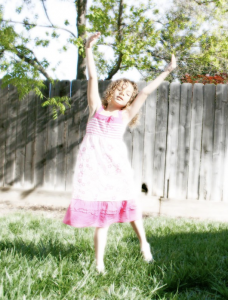

Once we’d polished off the strawberries and cake, the long trestle tables were dragged and scraped back against the walls, ready for the dancing to begin.

I wore my very best outfit. A white blouse, with a red corduroy skirt, knee-high socks, red ankle boots and braids. I thought I looked fantastic! 😉 There was a disco ball, a DJ playing loud, thumping music, a fog-spewing smoke machine and a rainbow of bright, flashing lights. I was in heaven!

Part way through the evening, there was a dance-off of sorts which remarkably, I won. It was not so much the winning that mattered to me, although that was exciting! But it was the fact that, for the first time in my 7 year old life, someone actually told me I was good at something.

I tucked that euphoric moment away inside my heart and never told a soul about it, until now. You see, in my family, moments like that would have been trampled on, twisted and turned against me.

Like the time I scored 98% on an end-of-year geography test. My father’s reaction was not one of pride but hostility and rejection. As I showed him my report card, anxiously hoping for some kind words or encouragement, he shrugged and demanded: ‘what happened to the other 2%?’ I was deflated and crumpled in my disbelief. There was no way I was going to let my father in on my dancing-joy and risk him destroying that dream too.

If you experienced trauma and abuse growing up, chances are, this sounds familiar to you. You can probably relate and think of many experiences from your own childhood where you were criticized or shamed and left feeling like you just weren’t good enough. And my guess is that like me, these repeated experiences gradually eroded your confidence and self-esteem.


Our childhood experience dictates our adult identity…

When we have a history of emotional, physical, or sexual abuse and trauma, the detrimental effect that it has on our identity and self-esteem is profound. It impacts every area of our lives from our health and well-being to our relationships, our weight, our finances and so much more. The challenge that so many of us still face as adults, is thinking that what happened to us was our fault.

But, the reality is that so many of the things we did to survive, whether it be self-harm, self-hatred or neglect; all the things we thought about ourselves and all the ways we acted-out, were in fact simply coping strategies that we turned to in order to survive.

And we did survive!

When you think back to your childhood, what were you like? What did you love to do? Did you sing? Did you dance? Did you write stories? Were you funny? Were you creative, artistic or brilliant at math? Perhaps you loved to read or play sports. Or to make potions or DIY science experiments. Were you encouraged in these pursuits? Were you playful and care-free? Or was your open spirit and curiosity about the world squashed and belittled?

You see, our early years are so incredibly formative in the development of our identity and belief systems. They carve out who we believe ourselves to be and how we think, feel and speak about ourselves.

If we are supported, nurtured and loved, our beliefs become nourishing and help us succeed in our lives. If however, we are ridiculed and abused, the words we hear tend to become our critical inner voice; the voice that constantly loops in our head, over time, strengthening our negative beliefs, and creating the emotional blocks that hold us back and keep us feeling stuck in our lives.

But we don’t have to stay stuck. When you look back now, was there ever a time (that you can consciously remember) when you felt more care-free and like ‘yourself’? If so, it is these fragments of self that we can begin to re-kindle, reclaim and stitch back together in our healing journey. And if not, then we have an opportunity to begin to create our identity and sense of self anew.


My trauma had a profound impact on my identity!

As a very little girl, (way before my disco-dancing win) I was always singing and dancing around the house. I found an old discarded wooden door in the garage, dragged it to our back yard and used it to pretend I was a tap dancer and the door was my stage!

I would put on shows for my stuffed animals. At age 5, I finally convinced my Mum to let me try ballet. I took a few classes and absolutely loved it. But money was tight and around that same time, my dad got a new job. We moved to a new city in a different part of the country. The lessons stopped and I was heart-broken.

So how did I go from being a playful, exuberant, little girl to a timid and terrified shadow of myself?

I was born open and care-free. But, growing up, nothing I ever did or tried to do was good enough to please my father.

Every thing I loved could and frequently would be ripped out from under me. Whether it be dance lessons, a favorite stuffed toy, an ice cream or the freedom to visit and play with a friend, nothing was certain and nothing was safe.

Every tentative step I took towards expressing myself and just being ‘me’ was diminished and ridiculed by cruel words, snarling glances, put downs and jabs. As a result, I lacked confidence and grew increasingly hyper-vigilant, fearful and introverted.

Living in a violent home with an alcoholic father, I quickly learned that it was not safe to be seen, and down-right dangerous to be extroverted, silly or playful.

Anything could set my dad off and his explosions were unpredictable and brutal. From beatings to verbal tirades, to manipulation, threats and gas-lighting, I went through it all.

Add to this the sexual abuse that I experienced and witnessed, and the result was a cumulative stripping away of my self-esteem.

There is no one event or pivotal moment that I can look back on and pinpoint as the exact cause of my plummeting self-confidence.

Instead, it was a never-ending barrage of abuse; sometimes subtle, sometimes direct – always damaging. Like a shoreline ravaged by ceaseless tides, my confidence and personality were eventually eroded to near-nothing.

I retreated inside my body in a form of internal dissociation. (We can either dissociate out of our body externally or we can dissociate internally – retreating and disappearing inwards)

What Was Your Experience Like?

Can you relate to this erosion of self? Take a moment to think about how you survived your trauma or abuse?  What kind of experiences did you live through? Did you fight back? Did you flee? Did you freeze, fawn or dissociate? How did what you experienced shape you and your identity? What has your abuse cost you and how does it still limit your life today?

 .
.
I Became Invisible to Survive

After the ballet lessons stopped and we relocated to the North of England, my world shrank and it became my sole intention to hide and stay safe. To be invisible. To pass through my days at school and at home unnoticed. I cut myself off from my body sensations, feelings and emotions, going through each day on auto-pilot.

I had no idea that the emotional, physical and sexual abuse were not my fault. In fact, I thought I had caused it all. I was told, explicitly by my father and shown implicitly through his mis-treatment of me, that I was bad and at fault and I blamed myself entirely.


The Forming of Trauma-Bonds

This self-blame is so prevalent among sexual abuse and trauma survivors. To turn the blame inwards is a hugely common, yet unconscious survival strategy.

When a child is being abused, they DO NOT stop loving their abuser. They stop loving themselves. This is a pattern that is simultaneously destructive to the child’s emotional well-being and yet essential for survival.

When a primary care-giver is also the main source of pain and suffering, a child’s brain has to work extra hard at survival. In order to keep receiving care from an abuser, children will often unconsciously convince themselves that the care-giver is NOT bad, but that it is they themselves who are at fault, bad, wrong, to blame.

This is a complex coping strategy, and one of the main ways child abuse survivors are able to continue to receive care in the face of maltreatment from an abusive caregiver. It is commonly known as the Fawn Response and is frequently seen in hostage situations where it is referred to as ‘Stockholm Syndrome’. This is where the hostage will form an attachment bond with their captor (or abuser) in an unconscious attempt to ensure their survival.


So How Did I Break Free From These Trauma-Bonds and Move From Merely Surviving to Thriving?
My path to healing has certainly been long and winding.  In the beginning I tried so many different things in my attempt to feel better.

I tried yoga and meditation; dancing, and swimming. I tried positive affirmations and journaling. I tried kick-boxing and running. I tried body work and acupuncture. And I prayed. A lot. All of these things were helpful to varying degrees.

The biggest shifts that I have made through it all though have been by combining EFT Tapping with Somatic Experiencing. I have sought the guidance of coaches and made huge progress independently too.

Gradually, I have worked to re-wire my brain and my nervous system. I used Tapping to release old negative beliefs and patterns of behavior that were handed to me and which I took on as my own. Somatic Experiencing enabled me to sit with the flashbacks and body memories, processing and releasing them. Along the way, I have reclaimed pieces of myself. I dance weekly now and that nourishes my soul and grounds me into my physical body in a way that has been profoundly healing.

Little by little, I have found more safety in my body and more safety in my day-to day life too. I am a wife and a mother and a coach despite the trauma that I have experienced.

Do I still get triggered – yes. Is there still more to heal – of course. But I’m no longer the terrified shadow of myself that I was for so long.

For too many years, I put pressure on myself to heal. Pressure to heal more quickly and more completely. I fell into the ‘I’ll be happy when…’ trap, believing that only when I was ‘fully healed’ could I really live my life.

I mistakenly thought ‘I’ll be worthy of love when I’m healed. I can start a family when I’m healed. I’ll be happy when I’m healed. I’ll reach my goal weight when I’m healed. I’ll be a coach, capable of helping other people when I’m healed.’

Eventually though, I got tired of waiting for this mythical healing-completion-date to arrive and so I stopped waiting and started living. And living unapologetically. I finally realized that I am not broken. And I do not need fixing.

What happened to me was not my fault, just as what happened to you was not your fault. I cannot change what I experienced, but I now refuse to let it define me or limit me in all the ways it used to.

I have learned that healing does not happen in a neat and tidy, controllable vacuum. It happens along the way. Healing happens amidst the chaos and the messiness of life. Healing is part of my life, but it is not my whole life. When I am triggered I Tap, I journal, I process and I work to release my pain. But then I go on with living. And you can too.

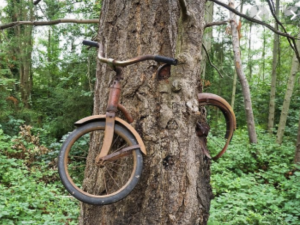
I came across a photo of a tree recently that really resonated with me. The image sums up what healing feels like for me.

Years ago, someone chained a bike to this tree. But the tree did not stop growing. Instead, it continued to grow. It grew around the bike. The bike, just like our trauma, is a part of us. We cannot change what happened to us but we don’t have stop living until we heal. We can reclaim our identity and self-esteem now and we can heal as we live and grow.

Whether you’re just beginning your healing journey or you’ve been on this path for years, please know that I’m here to guide and support you as you work to release your trauma and reclaim your identity and sense of self. I see you. You deserve to be heard and you deserve to heal.

Why Birthdays and Other ‘Significant Dates’ Suck So Much When You Have a Past With Trauma

This week has been a bit of a rough one. On Saturday it was my husband’s birthday. On Monday it was my dad’s. This week it’s mine. You might think that that would make for a fun-packed few days. But the exact opposite has been true.

You see, for me, as for so many people who have experienced long-term trauma or sexual abuse, Birthdays, Thanksgiving, Anniversaries, Christmas and other family-based ‘significant dates’ can be extremely triggering.

They can bring up all sorts of memories and trauma responses (both conscious and unconscious) that can set us spinning into despair for days or weeks on end.

In this blog post I want to explore some of the emotions that can come up around birthdays and other significant dates, and discuss how to recognize when they are triggering you; how to pause and really feel what you’re feeling when you are triggered, and what steps you can take to find relief and move forwards in a way that best serves you.

Before we start, I’d like to invite you to take stock of which significant dates or ‘special days’ affect you. Are there certain dates or holidays that you dread as they approach?  Take a moment to notice how you feel in the run-up to these days . Do you have certain rules you feel like you have to follow? Do you get overly tearful or angry or push people away? If it’s a birthday, do you throw yourself a big party or hide-away wishing for it to pass-by unnoticed? If it’s Thanksgiving, Christmas or another typically family-based holiday, how do you act during those days?  Do you feel depressed, lonely or argumentative? If so, please know that you are not alone!

I’m going to share some of my history around birthdays and what happened with this year’s birthday, but as you read, remember that this can apply to any holiday, anniversary or other significant date in your life…

A history of sexual abuse can cause a love-hate relationship with birthdays (and other ‘special days’).

As a kid I both loved and hated birthdays. I looked forward to them as a day of cease-fire. No one yelled, no one got beaten, everyone was nice. It was as if someone had pressed pause on our regular life and we magically became a different family for the day.

There was some kind of unwritten code and we all tried so hard to make things perfect. Walking on eggshells to make sure nothing could possibly set my father off. Reality was suspended. Mum would bake a cake. She was good at that. And, although the budget was pretty limited, she would buy us lots of little gifts and wrap each one individually in her attempt to make us feel special. 

But throughout my birthday, despite, or perhaps because of, everyone’s overt niceness, I could never quite shake the fearful, uneasy feeling gnawing at me. A sinking feeling of dread that the day would soon be over; the magical world would shatter and everyone would be back to normal.

Maybe this explains why I never wanted to go to bed on my birthday. I always wanted to suck every last moment out of the day. To hold on to the fantasy that I could have a loving and safe home. The annual birthday-break from physical, emotional and sexual abuse, made it increasingly difficult to return to reality.

YOUR CHILDHOOD BIRTHDAYS…
How were your birthdays as a child? Were they a better day than usual or were they worse? Did your family celebrate you or was there more abuse or neglect on those days? Your experiences as a child on your birthday will most likely still have an impact on your life today.

Fall is always tough for me…

Flash forward to my life today and although I now live in a safe and loving home with my husband and 3 kids, I still find Fall to be an extremely challenging season. The clocks go back, the evenings are drawing in, it’s chillier in the mornings and at night and this triggers in me a need to take stock.

I start to ponder how far I’ve come this year. Have I done enough? Am I where I thought I’d be? Did I achieve my goals? This critical voice invariably hijacks me for a while, berating me for a slew of perceived failures and inadequacies.

Mostly I’m able to recognize the pattern, stop and realize that this voice is not me; that I am exactly where I need to be. But this year, a few details collided causing me to tail-spin into a pretty dark place, leaving me completely unable to recognize that I’d been triggered.

My manic reaction was really my trauma response!

It all started last Saturday with a seemingly innocent decision to throw a joint birthday party for my husband and I. In his mind this would be easy and convenient. A no-hassle way to celebrate, killing two birds with one stone. My reaction however, was completely the opposite.

I began to panic and catastrophize. ‘I don’t want to throw a party. There’s too much to do. No one will come. Who would want to celebrate me anyway? I’ll have to bake. There’s not enough time’ and on and on my mind raced. My husband did his best to reassure me that everything would be fine. All I needed to do, he said, was to make a plan and take it one step at a time.

It’s supposed to be fun after all…Oh and could I please bake him a cake?  It was a seemingly innocent question.  After all, I’ve baked lots of cakes in the past and have always loved baking.  But my initial reaction was… “Wait… What?!”

As a recovering people pleaser and party-planning nut, the idea of baking my husband a birthday cake tipped me over the edge and sent me into a party-planning frenzy that I now see had absolutely nothing to do with the party and everything to do with my childhood trauma.

YOUR BIRTHDAYS TODAY:
Take a minute to think about how you act and react to your birthdays today. What kind of things trigger you? Perhaps it’s that people don’t remember your birthday or that only 23 people commented of your social media feed. Remember though, when we get triggered, it rarely has anything to do with what is going on in our present life today. It is usually about the unresolved pain and suffering of back then.

I was afraid of breaking all the rules

You see, although I consciously knew that nothing bad would happen if I said no to a party and I knew that it would all be ok if I bought a cake from the local store, unconsciously I was afraid that I’d be breaking the unspoken code of perfect birthdays drilled into me since birth.

I felt a growing sense of panic and dread that if the day was anything short of perfect, something terrible would happen and that I would somehow destroy my one chance to stock up on ‘love’ for the year! And so, I said yes to it all. Yes to the party, yes to 75 guests. Yes to a homemade 2 tiered cake. Yes to balloons and every other little thing. I said yes, but my body had other ideas!

The body really does keep the score!

We had agreed to the party on the Saturday.  A day later, I awoke with terrible back pain. I could not bend or twist from side to side.

I called my chiropractor and managed to get an appointment plus two more later in the week. My chiropractor asked me what I had done to injure my back. Nothing! Had I had a fall? Or a collision? No! Had I hyper-extended it somehow? No!

By the third appointment he said everything was properly aligned with my spine and ribs. There was no physical reason that he could find to explain the pain that I was experiencing. Then he asked a question that made me stop dead in my tracks! ‘Are you usually slow to heal?’

I suddenly realized that in my panic, I had forgotten to ask myself what was really going on underneath the pain. What emotions were under the sensations in my body. I know, I know, I do this work with clients everyday, but sometimes, when it comes to our own journey and when we’re very triggered, we can forget even the basics of how to heal!

You see, part of my work with Tapping and SE, is explaining to people that, when it comes to physical pain, (and especially chronic pain) it is all too often our unconscious negative emotions and past traumatic experiences that create and keep the pain locked in place.

Chronic pain is frequently created by the constriction in our bodies due to stress, anxiety and and fear combined with the hyper-sensitivity of the muscles, nerves and fascia. Healing is either prevented from happening or is radically slowed because when we are under emotional stress, the body is in the stress response (sympathetic nervous system) rather than the healing response (parasympathic nervous system).

With my situation, I had forgotten to ask myself the very question that I so often ask my clients… ‘what emotion is under the pain?!’ And it wasn’t until my chiropractor asked me if I was usually ‘slow to heal’ that I remembered to ask myself this question. 

I was so angry with my body!

Rather than thinking about the emotions, I had only been focusing on the mechanics of my body. I was hating my body and feeling like it was betraying me. I was furious at my back for what I perceived to be its stubborn resistance and lack of co-operation with my plans to get things done. I had a time-line and a plan for a party and I refused to let my back stop me executing that plan perfectly!

But I had been blocking out all my feelings. I was dissociating. Numb. Running on auto-pilot. All week long I’d been on a frantic hamster wheel to go faster.

If I could just do more, do enough, get it all done, then the party would go well. Then no one would get hurt and I’d finally be filled up with the love and acceptance that I had craved as a child. Of course, this had all been happening on an unconscious level. But thanks to my chiropractor, it was now very much in my conscious awareness. I suddenly realized that it was not about this party! It was about all the years and birthdays that had preceded this one as a child. The residual panic, dread, fear, hopes, dreams and crushing disappointments.

No matter how much my mother did on that one day each year to make the day ‘special’ it was never enough to counter-balance or compensate for the devastating abuse I experienced the other 364 days of the year. I longed to feel safe and loved. As a child, I hoped and prayed that if I was just good enough, then I could one day do enough to prove I deserved care, attention, affection and love.

So now that I knew I’d  been triggered and  I was having a trauma response – what  could I do about it?

With my chiropractor’s question, I saw that I was in the middle of a trauma response. And so I stopped. I sat in my car at 8am on the morning of my husband’s birthday and our party and I cried. Actually I ugly cried. I sobbed and sobbed. Filled with grief for all the years I hadn’t cried or felt the pain wrapped up in a big birthday bow. It’s not that I had been slow to heal, it’s that I had not been allowing my self the space and time to feel the pain of my emotions. In resenting and blaming my body and my back, I had failed to see the tremendous wisdom in my body’s sensations.

I had thought my body was betraying me. But now I see that my body was actually speaking up for me. Saying all the words that I couldn’t say. Communicating how desperately sad and alone I have always felt on birthdays. And how much grieving I had to do for all the days and years of my childhood lost to fear and terror. My back was trying valiantly to put the brakes on my manic cycle in an attempt to get me to slow down and stop long enough to actually feel.

And so I made a different choice. Instead of continuing to push through, I sat and sobbed. I allowed all the feelings to finally come crashing in. Without censoring or blocking them now. I allowed myself to feel and to grieve. This is what I’d been trying to resist and avoid for so many years.

I’m not sure why, but even now, after all my years on this healing journey, I still sometimes fall into the trap of thinking that feeling my emotions (especially grief) is going to be unbearable. That the emotion will consume me. That I’ll fall into a chasm of grief and never climb back out.   Can you relate to that?  Do you ever feel like you can’t possibly allow yourself to feel because you believe you’ll never be able to pick yourself back up?

In reality, the exact opposite is true. It’s only in allowing ourselves to go into the darkness; in allowing ourselves to feel, and ugly cry, and then release the pain, that we give ourselves the freedom to put ourselves back together and heal at the deepest level.

When we can truly sit with our painful emotions we make space and time for true healing to happen.

When I stopped distracting myself with the business of the party; when I stopped dissociating and resisting my emotions, and finally let my tears flow, yes it was intense. Yes it felt god-awful in the moment.

But after a while my sobs became less overwhelming. I began to breathe deeper. I began to Tap and allowed myself to think of my father (something I rarely do) and to grieve him. This is challenging and complex for me, because he is still living and yet we are estranged. But this was the grief and the mourning at the core of my back pain. I allowed myself to connect with my inner child and to let her mourn the daddy she wishes she could and should have had. The daddy who would have played with her and comforted her and kept her safe.

So what now?

After what felt like ages, when I was all cried-out, I drove home feeling much lighter. My back felt  more at ease. I could turn and twist with a greater range of motion. I talked to my body – to my back and made a promise…

Yes I had committed to this party, that I couldn’t change. But, what I could change was my approach to it. I promised to take it more slowly. More deliberately. Less manically! I chose to enjoy watching the kids play soccer in the rain during the party (without thinking that I had caused the rain!). I had fun chatting with friends without debilitating fear of judgement. I allowed the residual sadness in my belly to be there. I let go of the idea that I had to make everything perfect in order for me to be safe.

Maybe it’s ok for birthdays to not be perfect. Maybe it’s ok to not feel ecstatic and to even feel miserable. Maybe there don’t have to be any rules at all and I can just be however I am. I’m not sure what this next year will bring or how I’ll feel when my birthday inevitably rolls around again, but I do know that I’m grateful to my body and to my back for showing me that birthdays don’t have to suck quite so much – if we can just feel!

Steps you can take if you get triggered by Birthdays, Thanksgiving, Anniversaries, Christmas or any other significant date…

As you read the above, I hope that you were able to reflect on how you’ve been triggered in your own life around specific dates and holidays. And I also want to give you some practical steps that you can follow to help you if and when you do feel triggered.

Step 1 – Get clear on how you really feel:

Begin by writing down how you really feel about your upcoming birthday, holiday, anniversary or other significant date. Just write whatever comes to mind without censoring the information.

For example: ‘I hate birthdays. No one remembers. I never get a gift. My best friend had a bad car accident on my birthday when I was 11. My siblings always got more toys than me. My mother threw me a party when I was 6 and no one came. My husband filed for divorce on Christmas Eve. I don’t like getting older. My body aches more. I’m getting fatter. I don’t make as much money as I thought I’d make by now’. Whatever you truly feel is the right thing to write here.

Step 2 – What do you notice in your body when you write this?

This is a crucial step and one that so often gets missed. For me, my back was where I was holding a great deal of emotion about birthdays. Take a moment to tune in to your own body now. When you think about birthday or other ‘special occasion’, what do you notice happening inside? Do you feel tension in your shoulders? Or a knot in your stomach? How deeply are you able to breathe? Whatever you notice can be combined with Step 1 to help you with some somatically centered Tapping in Step 3.

Step 3 – Use your writing combined with how your body feels to create your Tapping Script:

Now that you’ve written down how you truly feel about birthdays (or other ‘special occasion’) and you get a sense of how those feelings are showing up in your body, go ahead and rate on a scale of 0-10 what intensity you’re feeling right now with 0 being the least and 10 being the most. Maybe you feel sad about Christmas at a level 9 and you feel that sadness in your heart. Or perhaps you feel a sharp stabbing pain in your left knee at a level 7 whenever you think of Uncle Joe coming for Thanksgiving each year. Whatever the occasion, once you have your number, we can begin Tapping. Remember, although I am giving a general Tapping script here, please think about what is significant and true for you right now. As we Tap, think about the date or occasion that is triggering for you. Feel into the discomfort or other sensation or emotion present in your body as you think about this date and notice how things shift for you as we Tap.

Tapping Script For Relief Around Birthdays, Holidays and Other Significant Dates:

Karate Chop Point: (Set Up Statement)

  1. Even though I’m feeling really anxious because this date is coming up and I feel the anxiety in my body. I feel it at a level_______ in my _______ I accept myself anyway.
  2. Even though I’m really dreading this date. It’s feels like it’s looming and there’s no escape. I hate it every year and here it comes again, I accept that this is how I’m feeling right now.
  3. Even though I feel so much pressure and wish I could just fast forward past this horrible date. I wish it didn’t affect me like this. But I accept that it is what it is and I’m ok.

Now move on to the Tapping Points:

Top of Head (TH): I hate this date and I feel all this anxiety in my body at a level _______

Eyebrow (E): I feel so out of control

Side of the Eye (SE): I always feel the same about it and I don’t know how to feel better about it

Under Eye (UE): I wish it would just go away

Under Nose (UN): I don’t know why I feel this way

Chin (C): I feel like I’m crazy and my reaction is over the top, but I can’t seem to stop feeling this way

Collar Bone (CB): But what if this isn’t about right now?

Under Arm (UA): What if my anxiety and my reaction to this date is not about today

TH: What if it’s actually about back then?

E: I wonder what this event is bringing up for me?

SE: I wonder what this date is triggering in me?

UE: I give my body permission to communicate with me

UN: I allow my body to let me know what’s really bothering me about this whole situation

C: This is ridiculous, I just have to keep pushing through

CB: It’s what I always do.

UA: I have to be strong and brave

TH: I have to put a smile on my face and pretend I’m ok

E: No, I don’t. I’ve been doing that for way too long.

SE: I wonder what would happen if I could just stop for a moment.

UE: I allow myself to pause

UN: And breathe

C: And with each breath I take I allow myself to find just a little peace and clarity about what’s really going on for me right now

CB: I acknowledge that this is not really about today.

UA: It hasn’t really got much to do with this date today

TH: I recognize now that it’s actually about back then.

E: I give myself permission to acknowledge this situation and all that it means to me.

SE: Thank you body for bringing this to my attention and awareness

UE: I choose to allow myself to release some of the pain and emotions around this date

UN: I let myself feel my feelings now

C: Perhaps just 10% of my feelings.

CB: Maybe it would be ok to feel just 10% of my anxiety

UA: I could manage feeling just 10% of what I feel about this date

TH: And I notice now, that when I allow myself to feel my feelings they begin to change

E: As I feel my feelings they begin to feel less overwhelming and I feel a little bit clearer

SE: I feel a little more peace around the idea of this upcoming date.

UE: What if it’s not so bad this year.

UN: What if I can choose how I react to this date

C: And on this date I get to be in control of what I do and how I react

CB: Because I didn’t get to choose back then

UA: But I do get some choice today

TH: And I’m choosing to give myself a little bit of space and time when I think about this issue

E: When I think about this date, I choose to breathe and know that I’m safe right here right now

SE: I will get through this date

UE: I’m doing my very best right now

UN: And I’ve come such a long way in realizing how I really feel

C: I allow my body to release the remaining stress and anxiety around this date

CB: Letting it all go now so that I can think more clearly and feel more peaceful in my body

UA: And that feels pretty good.

Take a deep breath and now that you’ve completed these 3 steps and the Tapping, take another minute to check back in with your body. How are you doing now? Has your initial number changed? Has it gone up or down or changed in some other way? Has the place you were feeling some sensation or emotion in your body shifted? Do you feel less tightness in your belly or your neck and shoulders? How deep is your breathing now? When you think about your birthday (or other significant holiday, event or date) now, what comes up for you? You can repeat these 3 steps as many times as feels helpful to you.

You might feel good doing this Tapping Process by yourself, or you might feel overwhelmed and like you need some support. If this is the case, please know that it’s a good idea to reach out to a coach or therapist as you process big emotions. If you relate to my story or have experienced childhood trauma or sexual abuse, you can always contact me for one-on-one coaching and guidance. I’m here for you!

With Sexual Trauma, Pap Smear Tests Take On a Whole New Meaning…

I had made the appointment three months earlier. Secretly I was grateful for the long waiting list. Slowly but surely though, as much as I tried to ignore it, the day crept closer and loomed large in my mind.  Several times in the weeks leading up to it I thought about cancelling, concocting one excuse after another.

If you’ve experienced sexual trauma like me, you probably understand my hesitation in going. If you have not, then you might be asking “Why the unwillingness to go for such a simple five minute test?”

In this blog post I’ll share my experience of going for my first pap smear test since beginning to recover memories of childhood sexual abuse. More importantly though, I’ll explain why such an experience is not uncommon for any woman with a history of sexual trauma.  I’ll detail why it can be so challenging for us and, if you’ve had sexual trauma in your life, I’ll explain what you can do to make it easier for you in the future.

Let’s understand immobilization first…

When it comes to immobilization, one common experience that both men and women can relate to is going to the dentist for a routine check-up or cleaning.

While you’re there, you’re stuck in the chair, obliged to stay still while another person does something to your body. You feel powerless and uncomfortable, waiting for the time to tick by until you hear the magic words “you’re all done.”

For anyone with a history of sexual abuse, “routine” medical procedures and tests like this one as well as much more invasive ones such as an annual OBGYN visit, or endoscopy can be extremely triggering. This was definitely the case for me. Why is this?

The answer is that these experiences all have some common elements: 

There is a person in authority (doctor/dentist) performing the procedure, while the patient is (to varying degrees) immobilized, exposed and sometimes even mildly sedated.

In psychology terminology this is known as an “inescapable attack”.

Something happening to you that you cannot get out of. Yes, technically you could stand up and walk out of your teeth cleaning, but most do not. For many people with a history of childhood sexual abuse, these elements of immobility (feet in stirrups) can trigger emotional, visual or body flashbacks. The brain has “wired” or “coupled-together” the experience today of being immobilized during a routine medical procedure with the inescapable trauma experience of being sexually abused in childhood.

On the surface, it seemed like a routine pap smear…

I’ve had plenty of pap smear tests before. I used to go annually in my late teens and early twenties.

The stirrups, the open-back gown, the crampy swab, always the same. At one point, following an abnormal result showing pre-cancerous cells, I had loop-diathermy to remove them.

You might think that that incident would be more difficult than this one.  After all, I was half-naked, surrounded by not one, but an army of over-zealous medical interns while the diathermy took place.

I watched my uterus being scraped clean on a large impersonal monitor. The invasive procedure was followed by bi-annual pap smears for a period of three years. It was not pleasant, but diligently I went. The difference back then was that I had not yet begun to regain any conscious memories of my abuse. I had completely blocked it all out.

Not so when the day of this pap smear arrived. I awoke with a pounding headache. I put the kids on the bus to school and ran some errands, trying feverishly to distract myself from what was coming.

When I arrived at the health center, I did the medical intake with the Nurse. I wrote in my paperwork that “I have a history of sexual abuse. Please have the doctor explain everything that they will do in detail before they do it”. Although no one mentioned my abuse and it felt rather like a huge purple elephant in the room, the doctor did, to her credit, talk me through every step of the procedure.

I was given a cup to pee in and a pink, scratchy gown to put on. Everything was routine. My cervix apparently “looked great”. The doctor called the stirrups “foot rests”. It was over quickly. I dressed and went home.

It seemed simple enough, but there was much more going on than I realized.

My body still had a lot to say…

I drove on auto-pilot. When I got home, my head was still pounding. I trudged slowly through the day.

By late afternoon, my back was hurting. My left knee was throbbing. My left shoulder was aching. I had sharp, stabbing pains under my left rib cage and another beneath my right shoulder blade.

I went to lie down on the sofa. The light shining from the kitchen was hurting my eyes. I realized that I needed to listen to my body and process what had been triggered from my pap smear test.

I was also giving myself a really hard time. The test had been fine. I’d asked for the doctor to communicate each part of the process with me and she had done so. Everything she had done had been highly professional. Why was I so triggered by this? Why was I being so ridiculous?! I berated myself and I felt so stupid for having this reaction.

As I lay on the sofa, my body wracked by a litany of pain, I revisited the day in my mind, looking for clues as to why my body was so out of whack.

Figuring out what was wrong…

As I thought about myself, leaning back on the pillow in the doctor’s office, trying to sound normal in my conversation, I realized that I hadn’t actually been present at all. I had dissociated and gone numb.

I had been in a state of freeze. I had clasped my hands tightly together and dug the thumb-nail of my right hand into the flesh of the thumb on my left hand. For as long as I can remember, this has been an unconscious habit; a way to feel in control of things that are outside my control.

Back then, self – harm gave me a feeling of control.  I used to do it at the dinner table as a kid, when my sister would argue and fuel my father’s rage. I would grip my palms together under the table, digging my nails into my fingers until they bled, silently willing her to stop antagonizing him.

Somehow, the idea of me inflicting even a tiny amount pain on my own skin, made me feel that I had some kind of power to counter-balance the pain inflicted by others. This was a pattern of behavior, a survival skill that I developed at a very young age in order to survive in a highly toxic and dysfunctional family environment. By reverting back to this old habit during my pap smear test, my body was showing me that I did not feel safe in my current experience.

Understanding coping mechanisms…

Take a moment and ask yourself – what habits or patterns of behavior did you develop as a child in order to survive? How did they serve you back then? When do they re-emerge for you today? And what could they be trying to tell you – if you’re willing to listen?

Self – harm is a very common pattern of behavior for abuse-survivors, whether it be cutting, self-mutilation or any other form of harm. It stems from feeling fearful, trapped and powerless to escape or change a situation and to the child it can bring a temporary release or relief from the pain being endured.

For me, I engaged in various behaviors including breaking and bloodying my fingers, giving myself a concussion, cutting flesh down to the bone. All in an attempt to find an outlet for my pain as well as an attempt to get the notice of doctors who treated me.

I was told it was normal, but it wasn’t normal!

Becoming aware that my body was clearly triggered by the pap smear test experience that Friday, I asked myself what it was specifically that had felt so violating and upsetting?

For me, it boiled down to one thing. The normalcy of the whole situation. This is what triggered all of my physical pains. The idea that a doctor could have her fingers inside my body, examining my cervix all the while casually asking me how old my kids were, actually felt chilling to me. Not because there was anything untoward about what she was doing, but because of what it made my body remember.

You see, as a child, the sexual abuse I endured frequently took place while I was being told ‘this is normal’, ‘nothing is wrong’. ‘This is what we do’.

For a child who is feeling that something is in fact very, very wrong, this messaging is incredibly damaging. It causes a lot of self-doubt and an inability to trust our own thoughts, feelings and body sensations. During abuse, my body was reacting as body’s do to stimulation. What I felt however, was that it wasn’t right to be touched by a trusted adult in this way. The result was massive confusion, fear, guilt and shame.

The trigger that day was the doctor calmly making small talk. My body, through the pain sensations that sprang up, was clearly alerting me to this and my need to process what was really going on.

Working through the experience and processing the trauma…

If you’ve ever experienced seemingly random body pains or sensations, it’s important to ask yourself, “What could these be drawing my attention towards?”

In my situation, once I became aware of all the different body sensations that I was having, I started to track them. As a Somatic Experiencing Practitioner (SEP), this is an essential part of the healing process. I took out my journal and wrote down all the places in my body that were hurting.

Then I noticed and described each pain in as much detail as possible. For example, “I have a sharp, deep red, gnarly stabbing pain going deep into my rib cage” was one sentence that I wrote that day. “The stabbing feels fast and relentless.”

From there, I used this information as the starting point for my Tapping.

“Even though I feel this sharp, deep red, gnarly stabbing pain going deep into my rib cage and the stabbing feels fast and relentless, I know I’m safe right here, right now today.”

Saying the words today that it was not safe to say back then…

By using somatic (body) awareness to inform my tapping, I was able to get to the understanding that the key issue here for me was:

Even though your words are telling me that what you are doing to me is ok, my body does not think or feel that it is ok. I don’t think or feel that it is ok. It is not ok for you to tell me these lies. It is not ok for you to touch my body in inappropriate ways and tell me there is nothing wrong.

It is not ok for you to abuse me all the while telling me that this is normal behavior. It is not ok for you to invalidate my physical pain, fear and terror by telling me I’m crazy and that this is “just what we do to show love” All lies.

So, whilst the pap smear experience in itself was all perfectly proper and not abusive, the body memory and experience that it triggered and brought up in me for resolution was a hugely important one.

By listening to my body and tracking my body sensations in my journal, I was able to release the emotions that had been trapped for so long in each of those body parts. The confusion. The sadness and grief. The feelings of betrayal and overwhelming shame that I must somehow have caused this or invited it. That something about me was inherently faulty, broken and tarnished by what in fact was never my fault.

If you’ve had similar experiences, try this…

I’m sure you understand some of my process from what you just read above, but let me summarize it and outline the healing process for your more clearly:

Step 1: Ask yourself “What is it specifically about what has happened today that is causing me body pain and what is it triggering in me from back then?” 

Allow the answers to come out unfiltered.  There is not right or wrong answer. Notice and describe each pain, sensation and emotion in as much detail as possible.

Step 2: Use your answers to create your tapping scripts like this…

“Even though I’m feeling this _(enter the specific pain, sensation or emotion here)_, I know I’m safe right here and right now today.”

Say the setup statement three times and then tap through the different points, continuing to address the pain and emotions that you are feeling.  You may notice that as you tune in to a specific pain, sensation or emotion, it might initially intensify. This is completely normal.

Step 3: Say the words today that it was not safe to say back then.  Speak your truth, even if it’s just to yourself.  It may come out as just a whisper at first, but keep saying these words.  Keep speaking your truth.

Continue saying these words with more emotion and gradually with more volume, until you feel a shift in your body. 

As you go through this process you’ll be combining the power of somatic mindfulness with EFT Tapping Techniques, to release the trauma from now and from back then, and to reclaim your authentic voice.

If you are feeling scared or uncertain about going through this process alone, feel free to reach out.  Sometimes working with a coach is helpful and necessary, especially when processing childhood trauma. I am here for you.  I believe in you.  Your voice matters. You deserve to be heard and you deserve to heal.

“I don’t feel safe now, because I wasn’t safe back then…” A story of trauma, survival, and a path to healing.

It started out pretty much like every Tuesday. Running around trying to get the kids dressed, fed and out the door on time. My husband Alex and his brother and sister were leaving for a Hay House author’s conference in New York City and from there Alex would be heading straight to North Carolina to lead a training event.

He usually only travels for a few days at a time, so this week-long trip would be a much longer solo-stint for me. Besides the inevitable ‘I miss Daddy’ chorus at bedtime, I keep things as routine as possible when he’s away.

I do my best for the kids, but honestly, I don’t like it when Alex travels. I definitely do enjoy the peaceful moments after the kids are sleeping, but overall, I feel a greatly heightened sense of vigilance and responsibility.

This time was no different. I could feel my anxiety was a little higher than usual that morning. I was a little more on edge; a little less patient. A little more apt to triple-check the times of each after-school activity before heading out the door.

My Alcoholic Father…

You see, as the daughter of an alcoholic, I grew up in a highly volatile and abusive home where chaos and uncertainty were my norm.

I became adept at planning and over-thinking; running through every detail and foreseeable outcome ahead of time. I was hyper-vigilant day and night.

I developed these strategies to keep myself safe. Rarely did it work. No matter how well I’d cleaned the kitchen, set the table or done the dishes, inevitably, when my father came home, he would still explode and my mother would still be beaten.

But, as children often do in these situations, I developed the ‘magical thinking’ that if I could just pre-empt whatever might set my dad off, then just maybe, I’d be able to somehow control my environment and avoid danger.

Something Wasn’t Right…

Flash forward to the chaos of life with three young kids of my own and I find myself frequently reverting to the same patterns of hyper-vigilance, especially in times of stress. The biggest challenges I could foresee this particular week were managing logistics of after-school activities and navigating solo bedtimes. How wrong I was!

Later in the day, I was packing snacks for school pick-up and the kit for my daughter’s horse riding lesson. She often rides outside, so I checked the weather. I saw rain and thunderstorms in the forecast. Nothing major. I texted the instructor as we’re pretty new to this horse thing. I wanted to make sure it’d be safe to ride in the thunder and lightening. She assured me that the horses would be fine. All good.

As I left the house though, an alert popped up on my phone. ’TORNADO WARNING’. Erm, what?? There must be a mistake. We don’t get tornadoes in Connecticut! I received the warning at 3.30pm. The warning time was for 4.15pm – 4.45pm.

I got to the kid’s school in time for pick-up at 3.37pm. Beautiful sunshine, clear blue skies with the tiniest breeze. The kids desperately wanted to play at the playground before horse-riding. I could in no way believe the warning, but something was nagging at me to get them home. I told my kids about the weather warning and quickly cancelled my daughter’s lesson.

On the ride home, just in case the warning was accurate, I explained again what tornados are. We decided that our safest place to go would be the basement back room. I made a quick action plan with them, giving them each a job to do. If the alarm did sound, my middle son was to help my daughter safely down the stairs. My 9 year old was to carry the dog crate down there for our new puppy. I would grab the puppy and flash light and follow them down.

Quick! Get in the Basement!

We arrived home. I looked out the kitchen windows. I grabbed the flash light, candles and a lighter out of the cupboard, just in case. This seemed ridiculous because the sky was still a brilliant and clear blue. The trees did seem oddly still.

Within less than a minute, the sky turned dark grey. It was so fast. The tornado warning siren went off on my phone. I yelled ‘ok kids, let’s go’. Ushering the kids ahead of me, I grabbed the puppy under one arm and the flashlight in the other.

We scrambled down to the back room. The guest room. No windows and the safest place we have. I couldn’t help but wonder if we were safe enough in here or if we should have a storm bunker like they do in Kansas.

What followed felt like the longest 15 minutes of my life. Within a couple of moments, the lights flickered on and off and on again and then we lost power for good. The wind was howling. The rain was horizontal and beating on the windows of the adjoining room. I peeked out into that room once. It looked completely grey-white outside.

I shut the door and rushed back to the kids. I found an old crib mattress that we were waiting to donate. I sat on the bed and held it up as a kind of shield for my kids. I’m not sure why I did that. Maybe from watching movies, maybe from hearing about people hiding in bath tubs under mattresses during hurricanes, or maybe from hearing stories of the London Blitz as a kid. I was frightened. My heart was thumping. I just wanted to keep them safe from any shattering glass or falling debris.

There we sat in the darkness. Puppy in her crate next to us. I sang. I sang silly songs and their favorite songs. Anything I could think of to block out the noise of the wind. My middle son was crying. ‘I’m never going to see eight’. I tried to keep the tone light.

After those 15 minutes, the wind stopped. We waited longer still. After a while of this stillness and silence, we dared to peek out. I was so nervous to go and check out the house and any damage. We tiptoed up the stairs. We were safe. It was over. But I didn’t feel safe, for me, it wasn’t the end, for me it was the beginning of the longest week of survival that I’ve experienced since I left my abusive childhood home behind.

The External Storm Was Over, but the Internal One Was Just Beginning…

I opened the door to the kitchen. I could see that there were leaves and branches strewn all over the place. The grill had been blown all the way across the deck, missing the window by only a couple of inches. We looked around out of all the windows.

We have two driveways. Both of them were completely impassable, blocked by fallen trees. Thank god, no big damage to the house. The closest tree had landed about two feet away.

The siding was spackled with blossom ripped from the cherry trees. Our shed was up-rooted, sitting jauntily at a 45 degree angle. A tree had fallen and its root-bowl had up-ended the shed. What a curious sight.

Across from the shed there were several more trees down. Peeking out from under the trees were my brother-in-law and sister-in-law’s two cars.

They had left them at our house when they car-pooled into the city. Now they were write-offs. Completely crushed by the trees. In total, we had more that twenty trees fall.

I learned later that we’d experienced a ‘microburst’, not a tornado, but it certainly looked and felt like a tornado had ripped across our property.

I took a deep breath. I settled the kids with flashlights and a board game at the kitchen table. Then I began the race to get the generator working before dark. Usually I’d stay with the kids while my husband went out to do the generator etc, but this time it was just me.

After several attempts, I managed to fill the generator with gas and get it going. I bruised my right arm badly when I smacked it against the railing as I pulled back on the start-cord, but I didn’t feel it at the time. It’s a small generator, but at least it runs the fridge and a few lights.

I set the kids up with a ‘sleep den’ made of sofa cushions and blankets in my room. I just wanted to keep them close. I got them in pjs and thankful for our gas stove, I heated some leftover pasta for dinner. I got them all to bed sometime just after dark.

The Numbness…

Sitting in the stillness and silence after they were safely asleep, I felt numb. Not scared, not relieved, just numb. That’s how I stayed for the entire following week. It was an altogether too familiar feeling for me. This numbness.

I’d spent a great majority of my childhood in this state. Often, following a violent outburst from my dad, I’d wake to wonder if I’d imagined it all. Broken china would be swept away, my mother’s bruises cleverly concealed. Dad would be sitting at the dining room table eating breakfast, pouring freshly brewed coffee from his oh-so-civilized french press craftier and asking me if I’d slept well.

I’d walk around in a daze trying to squelch the cold terror beating in my chest. I had failed to stop him, failed to protect my mother or myself and now I was left questioning my sanity. I ran around on auto-pilot, packing my lunch and getting myself to school. Going through the motions of ‘normal’ life. Inside I was planning my survival – I’d just have to be more vigilant, more prepared for the inevitable next time.

My body was stuck in the trauma of my childhood…

Back to my post-tornado world. Power was still out, schools were closed and in every moment, just like in my childhood, I tried to stay ahead of the game. Pre-empting the kid’s needs; feeding them, comforting them, playing with them, running the house as best I could. I had reverted to the survival energy patterns from my childhood.

I was running on fumes, devoid of any feeling about it all, not able to sleep well or rest, unable to stop moving or doing. Keeping going, keeping busy constantly. My nervous system was in a ceaseless state of sympathetic charge. I was utterly dis-regulated.

I could not register that the threat was over. This is how PTSD symptoms affect the body. I was responding to the tornado in just the same way as I had responded to the threat of my father when I was a child. My body could not tell the difference.

To my nervous system, both scenarios felt like life or death. My body was stuck in a loop of hyper-vigilance and preparedness. For me, as for so many people living with PTSD symptoms, there was no return to a more parasympathetic, relaxed state.

My PTSD had been triggered…

What I realized eventually, was that my response to the tornado and the ensuing chaos and clean-up had little to do with the present moment. Without an abusive background, I may have been able to take these events more in my stride. Yes, it would still have felt stressful, but it would perhaps not have felt quite so much like life or death.

Instead, I was caught in an emotional flashback. All of the old feelings of being trapped and powerless to change or escape my situation flooded my nervous system. The fear and terror and constant scanning for danger. This is what happens when someone with PTSD gets ‘triggered’. Emotions, sensations, smells, images from our childhood come rushing back. Sometimes this can happen by way of a visual flash-back.

However, what many people don’t know, is that you can have an emotional flash-back with no conscious memory or meaning attached. All I knew was that I felt a desperate urge to rush around and stay busy. I did not recognize until much later that an old pattern of behavior had been triggered in me. Under stress, I had reverted to the exact methods I had used to try (and fail) to keep myself safe as a child.

**Recognize that if you find yourself in a constant state of panic, dread or fear, it may not be about now. **
To heal this, the first step is recognizing that the panic, dread or fear being felt in the body has almost nothing to do what is happening in the present moment. It is not about today. It is about back then. Only with this recognition can a person begin to un-enmesh the past from the present.

I Desperately Needed To Be Believed… and Validated

When my husband finally returned home, I felt angry with him. Angry that he’d left. Angry that I’d had to keep it all together for the kids. Angry that he wasn’t there through it all. Angry that I’d had to make all those calls to insurance companies and tree companies. Angry that the day he returned home, I’d conveniently just had the destroyed cars towed. Angry that we had just gotten power back and it was a beautiful clear and sunny day. Angry that apart from the mangled trees, everything was all back to normal. Angry that he thought that I was fine. I wasn’t fine.

I of course, didn’t verbalize any of these angry feelings in the moment. At the time I didn’t consciously register or understand them. Everything was fine. Except that it wasn’t. I felt shut-down and numb.

I felt like I desperately needed my husband to acknowledge how horrible it had all been. I was longing for validation. It had really happened. We really had lost power. There really had been a tornado.

What my body was really looking for was validation that it had been real back then. Of course it was real now, there was very tangible, visible evidence that the tornado had happened, but my body and brain were trying to resolve residual challenges from my childhood within my current experience. I was stuck back in childhood survival energy patterns, longing to hear that I was not crazy. That the beatings I’d witnessed as a child really had happened.

I slipped into a dark, depressive place. I had an overwhelming sense of hopelessness, futility and inescapability. I had been involuntarily caught up in the path of a tornado, just like I had been with my father’s rage all those years before.

Processing the Trauma…

I sat quietly for a long time. I wrote in my journal. I tapped, a lot. What made the difference? How did I climb out of the dark place?

If my experience of the tornado, (of being triggered and stuck in panic, hopelessness, and fear today because of childhood trauma) in any way resembles your experience, you’re probably wondering how I got myself out of it all.

Here are some simple steps that you can take if you find you’re having similar struggles:

#1: As mentioned above, the biggest step towards healing your trauma is to recognize that if you’re constantly in a state of panic, dread or fear, it is most likely not be about today.

At first, this can be a very hard pattern to spot, let alone begin to question or change. The fear, panic and dread feel justified. Shouldn’t I feel fear when faced with a tornado? It all feels so real. The trick I have found that works for me is to notice the reactions of others around me.

If you recognize that you are in a more heightened emotional state than others around you, recognize that what you may be feeling is most likely not about today. It is most likely about back then. You may be feeling fear or panic today, because your nervous system has been triggered by something from your past. Only with this recognition can you truly begin to un-enmesh the past from the present.

#2: Acknowledge your experience and what you’re feeling.

I began by not denying any of my experience. I wrote it all down. And I talked about it all with my husband. I made space to digest all of my experience. I acknowledged how trapped and frightened I had felt. How alone and responsible I had felt for three little lives. Instead of continuing to run my lifelong busy patterns of distraction and protection, I stopped.

Initially, this stopping felt raw and unbearable. I felt as though I wanted to run away from myself, to climb out of my own skin.

But then, something interesting happened. The more I sat; the more I wrote and tapped. The more I felt; the more I began to feel myself beginning to defrost. The numbness began to recede.

This is a relatively new skill set for me. It is not something I knew how to do as a child. And, living in such a volatile and unpredictable environment, it would most likely not have been safe to discharge the threat response; the pent up survival energy. But today I am safe. Today I recognize, at least consciously, that the threat from back then is over.

If your current experience is different than it was back then, make sure to acknowledge this difference and recognize the safety you have now versus back then. Your body is unlikely to catch up in feeling safe right away, but the conscious awareness is a very important step.

#3: Use Tapping to work through the emotions and stuck energy you’re experiencing

I’m always grateful to have tapping to help me process flashbacks, emotions and experiences. While it can be tough to do the deep work alone (which is why I always recommend working with a professional when dealing with trauma), consistently using tapping to calm the nervous system is incredibly helpful.

The most challenging time to use tapping is when we’re highly triggered, say, in the middle of an emotional flashback. Regardless of whether it is a visual memory or a body memory that you’re processing, it can be very challenging to not be totally engulfed by the past. (The flood of pain-fighting chemicals as well as the fight/flight/freeze threat responses triggered by the nervous system all-but prevent rational brain function. This is what makes it so challenging to stop and tap in the moment.)

This is why it’s important to use tapping on a regular (if not daily) basis-when we’re not triggered at a level 10. Use it when the kids are frustrating you, or when you recognize negative thought patterns, or when you’re upset about what a coworker said. This allows you to create positive habits of tapping so that when you are triggered by your PTSD, you will be able to reach for tapping more easily as a tool to help you through the moment.

Keep Going!

I work day by day, to let my body and my nervous system catch up. It is not always easy, but each time I can pause and recognize my old survival patterns and hyper vigilance the easier it becomes. Each time I can validate my own experience, and each time I tap and process emotions and experiences, I feel one moment closer to me.

And really, that’s what recovery is all about. Not some vast, impressive instant wave of healing, but the small and incremental moments. Weathering each and every tornado no matter real or felt. Un-entangling the triggers of the past from the experiences of the present.

Yes, it is a constant work in progress, but with each day, I’m building resilience and rewiring my old unconscious survival patterns and that feels like huge progress to me.

If you’re also working your way through trauma, or just starting in your journey, know that there is hope. Life doesn’t have to feel like you’re living through a tornado that is constantly knocking you off your path. It can get better.

Sending you love and support… always!