How to Get Through Thanksgiving When You Have a Background of Trauma

For those of us with a trauma background, our gratitude on Thanksgiving must be tempered with a very real acknowledgement of our trauma and our pain.

Don’t get me wrong, I think gratitude is awesome. BUT when you have a history of emotional, physical and sexual abuse or trauma, a major holiday that centers around family, like Thanksgiving… can be massively difficult.

Just like any holiday or significant date such as a birthday or anniversary, Thanksgiving can bring up all kinds of trauma responses for us. Going back home to spend time with relatives; perhaps going back to the location where your trauma took place, or being with the people who caused your trauma in the first place, can illicit a trauma response no matter how much healing work you’ve done.

Everywhere we turn there are so many expectations, rules, traditions and rituals about how we ‘should’ feel and how the day ‘should’ go. Even if members of our family have been abusive to us (now or in the past), we may still hold on to the notion that we ‘should’ get along with our relatives. We may feel obliged to have civil conversations over dinner, even though on the inside we feel like running away or screaming.

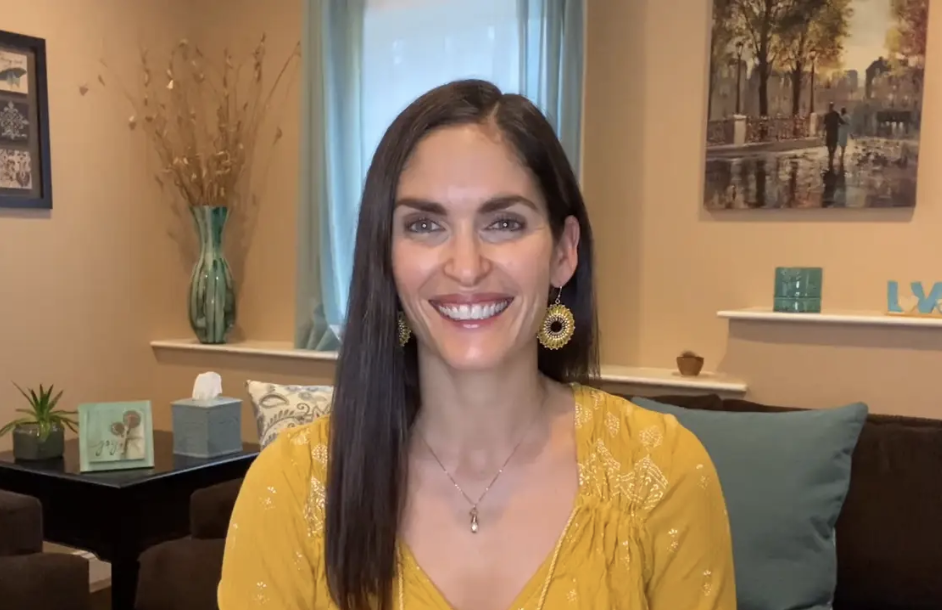
Which is why I recorded the above video to hopefully help you to get through the holiday season if you struggle with being around your family. 

But before you watched (if you haven’t yet) let me share two thoughts about this holiday:

#1 – Yes, be grateful.  Be grateful for all the good things in your life.  For your health if you have it, and your friends if you have them, and your children if you have them, or whatever else you CHOOSE to be grateful for.

But you do NOT need to be grateful for any people in your life that have hurt you in the past, or who continue to hurt you now.  Just because somebody is family, or just because they played an important role in your life, does not mean that you have to be grateful for them in any way.

#2 – Acknowledge the truth of how you’re feeling.  Thanksgiving is the holiday of stuffing turkeys, not stuffing emotions.  Don’t stuff everything down just to get through.  This may have been a survival pattern until now, but it’s time to be really honest with yourself. Acknowledge it if you’re feeling angry, or hurt, or sad, or abandoned, or lonely, or scared, or whatever else you’re feeling.  Acknowledge it, sit with it, tap on it, and do your best to release it so that it no longer has power over you.

Louise Hay used to say that ‘if you want to clean a house you have to see the dirt’. The same can be said about Thanksgiving.  See the dirt of how you’re feeling so that you can tap on it, release it, and finally free yourself from the invisible bonds of trauma that bind you to those who hurt you.

The reality is that maybe you can’t avoid seeing those relatives, but you can work to release the triggers you feel around seeing them and reduce the impact they have on your life today.

OK, ready to tap with me?  Press play above to start Tapping now. 🙂

And…. WHAMM! How Trauma Triggers Knock Us Off Course And What We Can Do to Get Back On Track Faster…

I had so many exciting plans for this week. Plans to reach some new fitness goals. Plans to be super productive with my work. Plans to meet up with some girlfriends. But  then… WHAMM! A trauma trigger knocked me off course and all my plans got derailed.

Sometimes a trauma trigger can be obvious but sometimes, like this week, it can be subtle and really hard to spot.

All I knew was that something was that something felt off this week.  Futility and self-blame had set in. I skipped workouts, missed my writing deadline and spiraled into a quagmire of darkness.

I couldn’t figure out what was bothering me or why, until today.

All week long I felt like I was dragging my feet. Everything felt like a chore. Getting out of bed in the morning took a Herculean effort. Working out at my usual 6am was almost impossible and when I did manage to drag myself from under the covers, I half-assed every workout.

I kept trying to put my plummeting mood down to external circumstances; The weather had been really dank and grey. My daughter was home from school with a nasty cold, again. She’d been keeping me up all night for days and I was extremely sleep-deprived. My dance teacher was still on vacation and I’d been really missing my lessons. But even cumulatively, none of these things were enough to justify the amount of futility and self-blame that I had begun to feel.

I was triggered and I forgot to use Tapping!
So how did I finally figure out what was getting me down? Did I stop to tap or journal or to sit and notice my feelings or body sensations? Honestly, no, for most of the week I did not!

I tried to brush it off, making the excuses we’ve all used at one time or another, like ‘I’m too busy to tap, it’ll pass soon, I’ll feel brighter tomorrow, I just have to keep pushing through’.

But the more I pushed the worse things got. The more I tried to ignore how I was feeling, the more bad things seemed to happen; the more I blamed myself for those things and the worse my futility became.

I blamed myself for everything from my cold-ridden daughter missing her dress-rehearsal at ballet to having to cancel my girl’s night out and everything in-between. It felt like there was no point in even trying when everything was going against me.

The turning point came when I tried and failed to get a workout to live-stream in our exercise room. My husband was passing through the room at the time and overheard me yelling at the tv:

‘Oh for fuck sake, the Universe hates me!! God clearly does not want me to do a workout.’

Now, this might sound dramatic, but it was the ridiculousness of my words that finally broke the pattern I had been running. Clearly something more was going on and it was way past time for me to stop pushing, to sit down and be with it. And so I did.

What I finally realized was that I’d been triggered. But by what?

What Was Your Experience Like?

Have you ever had an experience like this? Chances are that if you’ve experienced trauma like me, then you can relate to being triggered! Perhaps you’ve had an experience where you knew that things just didn’t feel right but you couldn’t work out why? Maybe you suddenly felt cranky, agitated or argumentative for no apparent reason? Or maybe you suddenly felt like needed to leave a restaurant or other public space or took an instant dislike to someone? Or perhaps you suddenly felt waves of grief, depression or futility that you just couldn’t shake?

So what can we do when this happens?

The first step is recognizing that we’ve been triggered in the first place. This is not always very easy to do.

Especially because by its very nature, a trigger is something that sends our nervous system into survival mode; the fight, flight or freeze states, and from these states we aren’t as resourceful or able to see things clearly.


How to identify a trigger…

While everyone and every nervous system is unique, there are some commonalities that can help us in this process. Identifying our triggers is truly a matter of exploration and curiosity.

We have to become aware of our physiological responses as well as our emotional responses to things around us. That means noticing if our heart-rate suddenly sky-rockets or pausing if we suddenly get very angry or depressed. It’s also about noticing any significant changes in our behavior.

For me this week, I could have spotted so many clues (had I been willing to pay attention!) When I did finally decide to stop running from my feelings, dissociating and pushing through, it became abundantly clear to me that I had indeed been triggered.


When we recognize that we’ve been triggered, we have to play detective…

Notice what might have happened to trigger you. When did your behavior or how you felt change? Was it a particular event or conversation perhaps?

If so, you can replay the situation slowly and carefully in your mind going over everything that happened (be aware that dissociation or re-triggering may occur and if it does – ground, ground, ground).

Pay close attention to the details. Notice where you were and who was around you. Were there any specific sounds or smells that made you feel uncomfortable?

Then, explore even further: what happened next or changed in the situation to make you feel triggered? What or who did you see, hear, smell, taste, touch or feel?

Identify: what was the actual trigger? And then what happened inside of you (what did you feel eg panic/dread/fear)? Naming any changes you can remember will really help you to identify and work with a trigger with the intention of calming your nervous system.

Lastly, see if you can connect what happened or how it made you feel to a situation from a past traumatic event.


My story…

For me, the process went like this:

I realized that I was having an intense over-reaction to the tv not working. I back-tracked to what had happened right before I started feeling futile and depressed and started blaming myself for everything.

I remembered that for the very first time, we had had a non-family member sleeping over at our house. We had hosted a party for our oldest son’s soccer team at the weekend. One of the kids stayed over.

I remembered telling my husband that I felt unsafe with the kid staying in the house. I remembered thinking that it was odd for this to bother me because what could possibly be threatening about a 10 year old child?! I also remembered worrying profusely about my daughter’s safety. I could not sleep and felt very on edge all night long.

By Monday, I felt drained and exhausted but consciously, I had forgotten all about the sleepover. This is why triggers can be so challenging and confusing. You see, I had had these awarenesses at the time of the sleep over, but it was a full 5 days later that I finally put all the pieces together.

It was only when I finally convinced myself to sit down and pay attention and tap that I was able to connect the sleep-over trigger with the extreme lack of safety that I had experienced growing up back then. I had been triggered by this child and this sleepover, but it was not about now!

It was about the danger that he and the sleepover represented to my nervous system. What I was being reminded of was a time of massive instability, uncertainty and fear coupled with the inescapability of frequent, sexually abusive house-guests.

I had been so afraid for my daughter not because she was in actual danger, but because the triggered part of me felt that I couldn’t keep her safe, just like no one kept me safe back then.

The moment that I had this awareness I felt immediate relief in my nervous system. The dread and terror that I’d been ignoring and pushing down just below the surface all week finally discharged from my body.

I used Somatic Experiencing and grounding techniques to allow the energy to dissipate. It was as if I could finally release the massive amount of pent-up survival energy that I had been bracing against all week.

But what about all that futility and self-blame I’d been feeling? Is it normal to feel this way when we get triggered?

Simply put, yes! The futility and self-blame that I experienced so strongly were actually the biggest clues that I’d been triggered. Not only that, but they were also a big indicator about the sexual nature of the original trauma too.

Futility and self-blame are extremely common responses to sexual trauma that are actually part of a complex unconscious, adaptive attempt to preserve a sense of control in the face of abuse.

If we go back for a moment to consider the definition of trauma. Trauma happens when a person experiences fear plus immobility. Trauma is inherently a loss of choice or control. It occurs when we feel immobilized, trapped and helpless.

Knowing this, it makes logical sense that being assaulted or abused is out of our control and not our fault. However, no matter whether the abuse was experienced as a child or as an adult, survivors frequently take on responsibility for their abuse, believing that they should or could have done something to stop it, subsequently, blaming themselves. Like all responses to trauma, there’s an adaptive reason for taking on this sense of responsibility or blame.
⠀⠀⠀⠀⠀⠀⠀⠀⠀
One reason that people (me included) form irrational self-blaming beliefs, habits and behaviors is to manage what is in reality, unmanageable and intolerable. You see, in the face of horrifying abuse, self-blame is more appealing than sitting with the utter hopelessness and futility of a complete loss of control.

Having no control or ability to prevent unthinkable things from happening shatters our worldview that we can be safe in the world. In this way we can understand why believing the assault was somehow our fault allows us to preserve some sense of control and therefore, hope.

When I was triggered, I resorted to a much younger age and pattern of behavior in repeatedly blaming myself for things that were clearly beyond my control and most definitely not my fault. This was not a conscious choice. Blaming myself for my daughter’s illness, the weather and my inability to figure out the tv were all unconscious attempts by my nervous system today to renegotiate the abuse that I had no control over back then.

So, once we’ve recognized that we’ve been triggered and we’ve played detective, what can we do next to help calm down our amygdala and our nervous system?

We can use EFT TAPPING… any here’s how…

It’s important to tap on the different aspects of the trigger. We must explore our physiological response as well as our emotional reactions.

We can then tap through the specifics of the event that triggered us as well as the original traumatic event (if we can consciously remember it). In addition we need to clear any sense of hopelessness or futility, reminding ourselves that what happened back then was not our fault.

Here are the steps again in outlined form:

Step #1 – Tap on the physiological response to the trigger
Step #2 – Tap on the emotional reactions you had to the trigger

Step #3 – Tap on the specifics of the event that triggered you
Step #4 – Tap on the specifics of the original traumatic event

Step #5 – Tap on any sense of hopelessness or futility that emerges

Although the script below is very general, if you’ve experienced trauma and have ever been triggered, this tapping will help you to calm your nervous system.

Tapping Script For: “I Feel Triggered But I Don’t Know Why”

Take a deep breath in and notice what’s present for you right now. What emotions are you feeling? Perhaps you’re feeling anxious or frantic? What do you notice in your body?

Are there any areas that feel stress, constriction or tension? Perhaps your back feels painful, your head aches, your throat feels tight or your left knee is throbbing? All of this is important information that will help us work with the trigger.

To get started, take a deep breath into your belly. On a scale of 0-10 (with 0 being the least and 10 being the most), notice how strong the feelings, emotions and sensations that you’re feeling are for you right now. Once you have a number you can begin tapping of the Karate Chop Point:

Karate Chop Point: (Set Up Statement)

1) Even though I’m feeling really triggered right now and I don’t know why, I accept how my body is feeling right now.

2) Even though I’m feeling all of these feelings, sensations and emotions about back then, and I feel really triggered, I accept that I’m safe right here right now in this present moment

3) Even though this feels really horrible and I want to distract myself from all of these feelings, emotions and sensations I acknowledge that I’ve been triggered by something and I’m ok anyway

Now move on to the tapping points:

Top of Head (TH): I’m feeling really triggered right now
Eyebrow (EB): and I’m having a hard time working out what’s bothering me
Side of Eye (SE): I just don’t feel very safe right now
Under Eye (UE): In fact I feel really agitated and panicky
Under Nose (UN): There’s something going on inside but I can’t work out what
Chin (C): I just feel really triggered
Collar Bone (CB): I wonder what happened to make me feel this way?
Under Arm (UA): But I’m afraid to know what’s underneath all this

TH: I’m feeling all this fear about what might be under this trigger
EB: And I’d rather just keep distracting myself and pushing through
SE: But I would like to feel better
UE: I’m not really sure why I’m feeling like this
UN: But maybe I’m willing to get curious about how I feel
C: I choose to tune into my body now
CB: Knowing that I’m safe in the here and now
UA: My body is feeling all these feelings and sensations and emotions

TH: But what if I could pause and breathe and slow things down
EB: So that I can create just a little bit of space and time
SE: Maybe I don’t even need to know what this is all about
UE: What if, just by letting my body know that it’s safe here and now I can release the intensity of how I’m feeling?
UN: But I need to know what’s happening to me
C: I’m still feeling a bit triggered
CB: I give my body permission to release some of this now
UA: I’ve been holding on to this to try and keep myself safe

TH: But I choose to remind my body that I’m safe here and now
EB: What if it’s safe to remember and release what’s bothering me?
SE: I see now that it’s not about now, it’s about back then
UE: I can release some of how I’m feeling
UN: It is safe to release this
C: Thank you body for trying to get my attention
CB: Thank you body for letting me know that something about now reminded you of something back then
UA: But I know that I’m safe right here right now

TH: And I can release this
EB: Letting go of all of this ____________(fill in the blank with the emotion/feeling or sensation)
SE: So that I can feel calm, peaceful and safe in my body now
UE: Releasing the remaining _______________ from my body now
UN: I’ve been feeling all of this _______________ about this situation
C: But I choose to let it go now
CB: So that I can feel some relief
UA: Knowing that I’m doing my best right now
TH: And that feels good

Take another moment now to check back in. With another deep breath in to your belly, notice what’s happened to your score? Has it changed? Has it gone up, down or has another aspect come up for you? You can tap through this script as many times as is helpful for you.

If you’re going through something and you’d like guidance and support, click here to find out about working with me one-on-one:

The Erosion of Self: How a Childhood History of Sexual Abuse and Trauma Gradually Destroys Our Identity and What We Can Do to Reclaim Our Self-Esteem

When I was 7, I went to a disco-themed birthday party. The birthday girl was my then best-friend, Helen. The mid-summer party was held in the local village hall.

Once we’d polished off the strawberries and cake, the long trestle tables were dragged and scraped back against the walls, ready for the dancing to begin.

I wore my very best outfit. A white blouse, with a red corduroy skirt, knee-high socks, red ankle boots and braids. I thought I looked fantastic! 😉 There was a disco ball, a DJ playing loud, thumping music, a fog-spewing smoke machine and a rainbow of bright, flashing lights. I was in heaven!

Part way through the evening, there was a dance-off of sorts which remarkably, I won. It was not so much the winning that mattered to me, although that was exciting! But it was the fact that, for the first time in my 7 year old life, someone actually told me I was good at something.

I tucked that euphoric moment away inside my heart and never told a soul about it, until now. You see, in my family, moments like that would have been trampled on, twisted and turned against me.

Like the time I scored 98% on an end-of-year geography test. My father’s reaction was not one of pride but hostility and rejection. As I showed him my report card, anxiously hoping for some kind words or encouragement, he shrugged and demanded: ‘what happened to the other 2%?’ I was deflated and crumpled in my disbelief. There was no way I was going to let my father in on my dancing-joy and risk him destroying that dream too.

If you experienced trauma and abuse growing up, chances are, this sounds familiar to you. You can probably relate and think of many experiences from your own childhood where you were criticized or shamed and left feeling like you just weren’t good enough. And my guess is that like me, these repeated experiences gradually eroded your confidence and self-esteem.


Our childhood experience dictates our adult identity…

When we have a history of emotional, physical, or sexual abuse and trauma, the detrimental effect that it has on our identity and self-esteem is profound. It impacts every area of our lives from our health and well-being to our relationships, our weight, our finances and so much more. The challenge that so many of us still face as adults, is thinking that what happened to us was our fault.

But, the reality is that so many of the things we did to survive, whether it be self-harm, self-hatred or neglect; all the things we thought about ourselves and all the ways we acted-out, were in fact simply coping strategies that we turned to in order to survive.

And we did survive!

When you think back to your childhood, what were you like? What did you love to do? Did you sing? Did you dance? Did you write stories? Were you funny? Were you creative, artistic or brilliant at math? Perhaps you loved to read or play sports. Or to make potions or DIY science experiments. Were you encouraged in these pursuits? Were you playful and care-free? Or was your open spirit and curiosity about the world squashed and belittled?

You see, our early years are so incredibly formative in the development of our identity and belief systems. They carve out who we believe ourselves to be and how we think, feel and speak about ourselves.

If we are supported, nurtured and loved, our beliefs become nourishing and help us succeed in our lives. If however, we are ridiculed and abused, the words we hear tend to become our critical inner voice; the voice that constantly loops in our head, over time, strengthening our negative beliefs, and creating the emotional blocks that hold us back and keep us feeling stuck in our lives.

But we don’t have to stay stuck. When you look back now, was there ever a time (that you can consciously remember) when you felt more care-free and like ‘yourself’? If so, it is these fragments of self that we can begin to re-kindle, reclaim and stitch back together in our healing journey. And if not, then we have an opportunity to begin to create our identity and sense of self anew.


My trauma had a profound impact on my identity!

As a very little girl, (way before my disco-dancing win) I was always singing and dancing around the house. I found an old discarded wooden door in the garage, dragged it to our back yard and used it to pretend I was a tap dancer and the door was my stage!

I would put on shows for my stuffed animals. At age 5, I finally convinced my Mum to let me try ballet. I took a few classes and absolutely loved it. But money was tight and around that same time, my dad got a new job. We moved to a new city in a different part of the country. The lessons stopped and I was heart-broken.

So how did I go from being a playful, exuberant, little girl to a timid and terrified shadow of myself?

I was born open and care-free. But, growing up, nothing I ever did or tried to do was good enough to please my father.

Every thing I loved could and frequently would be ripped out from under me. Whether it be dance lessons, a favorite stuffed toy, an ice cream or the freedom to visit and play with a friend, nothing was certain and nothing was safe.

Every tentative step I took towards expressing myself and just being ‘me’ was diminished and ridiculed by cruel words, snarling glances, put downs and jabs. As a result, I lacked confidence and grew increasingly hyper-vigilant, fearful and introverted.

Living in a violent home with an alcoholic father, I quickly learned that it was not safe to be seen, and down-right dangerous to be extroverted, silly or playful.

Anything could set my dad off and his explosions were unpredictable and brutal. From beatings to verbal tirades, to manipulation, threats and gas-lighting, I went through it all.

Add to this the sexual abuse that I experienced and witnessed, and the result was a cumulative stripping away of my self-esteem.

There is no one event or pivotal moment that I can look back on and pinpoint as the exact cause of my plummeting self-confidence.

Instead, it was a never-ending barrage of abuse; sometimes subtle, sometimes direct – always damaging. Like a shoreline ravaged by ceaseless tides, my confidence and personality were eventually eroded to near-nothing.

I retreated inside my body in a form of internal dissociation. (We can either dissociate out of our body externally or we can dissociate internally – retreating and disappearing inwards)

What Was Your Experience Like?

Can you relate to this erosion of self? Take a moment to think about how you survived your trauma or abuse?  What kind of experiences did you live through? Did you fight back? Did you flee? Did you freeze, fawn or dissociate? How did what you experienced shape you and your identity? What has your abuse cost you and how does it still limit your life today?

 .
.
I Became Invisible to Survive

After the ballet lessons stopped and we relocated to the North of England, my world shrank and it became my sole intention to hide and stay safe. To be invisible. To pass through my days at school and at home unnoticed. I cut myself off from my body sensations, feelings and emotions, going through each day on auto-pilot.

I had no idea that the emotional, physical and sexual abuse were not my fault. In fact, I thought I had caused it all. I was told, explicitly by my father and shown implicitly through his mis-treatment of me, that I was bad and at fault and I blamed myself entirely.


The Forming of Trauma-Bonds

This self-blame is so prevalent among sexual abuse and trauma survivors. To turn the blame inwards is a hugely common, yet unconscious survival strategy.

When a child is being abused, they DO NOT stop loving their abuser. They stop loving themselves. This is a pattern that is simultaneously destructive to the child’s emotional well-being and yet essential for survival.

When a primary care-giver is also the main source of pain and suffering, a child’s brain has to work extra hard at survival. In order to keep receiving care from an abuser, children will often unconsciously convince themselves that the care-giver is NOT bad, but that it is they themselves who are at fault, bad, wrong, to blame.

This is a complex coping strategy, and one of the main ways child abuse survivors are able to continue to receive care in the face of maltreatment from an abusive caregiver. It is commonly known as the Fawn Response and is frequently seen in hostage situations where it is referred to as ‘Stockholm Syndrome’. This is where the hostage will form an attachment bond with their captor (or abuser) in an unconscious attempt to ensure their survival.


So How Did I Break Free From These Trauma-Bonds and Move From Merely Surviving to Thriving?

My path to healing has certainly been long and winding.  In the beginning I tried so many different things in my attempt to feel better.

I tried yoga and meditation; dancing, and swimming. I tried positive affirmations and journaling. I tried kick-boxing and running. I tried body work and acupuncture. And I prayed. A lot. All of these things were helpful to varying degrees.

The biggest shifts that I have made through it all though have been by combining EFT Tapping with Somatic Experiencing. I have sought the guidance of coaches and made huge progress independently too.

Gradually, I have worked to re-wire my brain and my nervous system. I used Tapping to release old negative beliefs and patterns of behavior that were handed to me and which I took on as my own. Somatic Experiencing enabled me to sit with the flashbacks and body memories, processing and releasing them. Along the way, I have reclaimed pieces of myself. I dance weekly now and that nourishes my soul and grounds me into my physical body in a way that has been profoundly healing.

Little by little, I have found more safety in my body and more safety in my day-to day life too. I am a wife and a mother and a coach despite the trauma that I have experienced.

Do I still get triggered – yes. Is there still more to heal – of course. But I’m no longer the terrified shadow of myself that I was for so long.

For too many years, I put pressure on myself to heal. Pressure to heal more quickly and more completely. I fell into the ‘I’ll be happy when…’ trap, believing that only when I was ‘fully healed’ could I really live my life.

I mistakenly thought ‘I’ll be worthy of love when I’m healed. I can start a family when I’m healed. I’ll be happy when I’m healed. I’ll reach my goal weight when I’m healed. I’ll be a coach, capable of helping other people when I’m healed.’

Eventually though, I got tired of waiting for this mythical healing-completion-date to arrive and so I stopped waiting and started living. And living unapologetically. I finally realized that I am not broken. And I do not need fixing.

What happened to me was not my fault, just as what happened to you was not your fault. I cannot change what I experienced, but I now refuse to let it define me or limit me in all the ways it used to.

I have learned that healing does not happen in a neat and tidy, controllable vacuum. It happens along the way. Healing happens amidst the chaos and the messiness of life. Healing is part of my life, but it is not my whole life. When I am triggered I Tap, I journal, I process and I work to release my pain. But then I go on with living. And you can too.

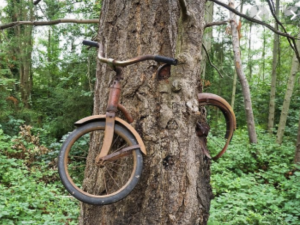
I came across a photo of a tree recently that really resonated with me. The image sums up what healing feels like for me.

Years ago, someone chained a bike to this tree. But the tree did not stop growing. Instead, it continued to grow. It grew around the bike. The bike, just like our trauma, is a part of us. We cannot change what happened to us but we don’t have stop living until we heal. We can reclaim our identity and self-esteem now and we can heal as we live and grow.

Whether you’re just beginning your healing journey or you’ve been on this path for years, please know that I’m here to guide and support you as you work to release your trauma and reclaim your identity and sense of self. I see you. You deserve to be heard and you deserve to heal.

Why Birthdays and Other ‘Significant Dates’ Suck So Much When You Have a Past With Trauma

This week has been a bit of a rough one. On Saturday it was my husband’s birthday. On Monday it was my dad’s. This week it’s mine. You might think that that would make for a fun-packed few days. But the exact opposite has been true.

You see, for me, as for so many people who have experienced long-term trauma or sexual abuse, Birthdays, Thanksgiving, Anniversaries, Christmas and other family-based ‘significant dates’ can be extremely triggering.

They can bring up all sorts of memories and trauma responses (both conscious and unconscious) that can set us spinning into despair for days or weeks on end.

In this blog post I want to explore some of the emotions that can come up around birthdays and other significant dates, and discuss how to recognize when they are triggering you; how to pause and really feel what you’re feeling when you are triggered, and what steps you can take to find relief and move forwards in a way that best serves you.

Before we start, I’d like to invite you to take stock of which significant dates or ‘special days’ affect you. Are there certain dates or holidays that you dread as they approach?  Take a moment to notice how you feel in the run-up to these days . Do you have certain rules you feel like you have to follow? Do you get overly tearful or angry or push people away? If it’s a birthday, do you throw yourself a big party or hide-away wishing for it to pass-by unnoticed? If it’s Thanksgiving, Christmas or another typically family-based holiday, how do you act during those days?  Do you feel depressed, lonely or argumentative? If so, please know that you are not alone!

I’m going to share some of my history around birthdays and what happened with this year’s birthday, but as you read, remember that this can apply to any holiday, anniversary or other significant date in your life…

A history of sexual abuse can cause a love-hate relationship with birthdays (and other ‘special days’).

As a kid I both loved and hated birthdays. I looked forward to them as a day of cease-fire. No one yelled, no one got beaten, everyone was nice. It was as if someone had pressed pause on our regular life and we magically became a different family for the day.

There was some kind of unwritten code and we all tried so hard to make things perfect. Walking on eggshells to make sure nothing could possibly set my father off. Reality was suspended. Mum would bake a cake. She was good at that. And, although the budget was pretty limited, she would buy us lots of little gifts and wrap each one individually in her attempt to make us feel special. 

But throughout my birthday, despite, or perhaps because of, everyone’s overt niceness, I could never quite shake the fearful, uneasy feeling gnawing at me. A sinking feeling of dread that the day would soon be over; the magical world would shatter and everyone would be back to normal.

Maybe this explains why I never wanted to go to bed on my birthday. I always wanted to suck every last moment out of the day. To hold on to the fantasy that I could have a loving and safe home. The annual birthday-break from physical, emotional and sexual abuse, made it increasingly difficult to return to reality.

YOUR CHILDHOOD BIRTHDAYS…
How were your birthdays as a child? Were they a better day than usual or were they worse? Did your family celebrate you or was there more abuse or neglect on those days? Your experiences as a child on your birthday will most likely still have an impact on your life today.

Fall is always tough for me…

Flash forward to my life today and although I now live in a safe and loving home with my husband and 3 kids, I still find Fall to be an extremely challenging season. The clocks go back, the evenings are drawing in, it’s chillier in the mornings and at night and this triggers in me a need to take stock.

I start to ponder how far I’ve come this year. Have I done enough? Am I where I thought I’d be? Did I achieve my goals? This critical voice invariably hijacks me for a while, berating me for a slew of perceived failures and inadequacies.

Mostly I’m able to recognize the pattern, stop and realize that this voice is not me; that I am exactly where I need to be. But this year, a few details collided causing me to tail-spin into a pretty dark place, leaving me completely unable to recognize that I’d been triggered.

My manic reaction was really my trauma response!

It all started last Saturday with a seemingly innocent decision to throw a joint birthday party for my husband and I. In his mind this would be easy and convenient. A no-hassle way to celebrate, killing two birds with one stone. My reaction however, was completely the opposite.

I began to panic and catastrophize. ‘I don’t want to throw a party. There’s too much to do. No one will come. Who would want to celebrate me anyway? I’ll have to bake. There’s not enough time’ and on and on my mind raced. My husband did his best to reassure me that everything would be fine. All I needed to do, he said, was to make a plan and take it one step at a time.

It’s supposed to be fun after all…Oh and could I please bake him a cake?  It was a seemingly innocent question.  After all, I’ve baked lots of cakes in the past and have always loved baking.  But my initial reaction was… “Wait… What?!”

As a recovering people pleaser and party-planning nut, the idea of baking my husband a birthday cake tipped me over the edge and sent me into a party-planning frenzy that I now see had absolutely nothing to do with the party and everything to do with my childhood trauma.

YOUR BIRTHDAYS TODAY:
Take a minute to think about how you act and react to your birthdays today. What kind of things trigger you? Perhaps it’s that people don’t remember your birthday or that only 23 people commented of your social media feed. Remember though, when we get triggered, it rarely has anything to do with what is going on in our present life today. It is usually about the unresolved pain and suffering of back then.

I was afraid of breaking all the rules

You see, although I consciously knew that nothing bad would happen if I said no to a party and I knew that it would all be ok if I bought a cake from the local store, unconsciously I was afraid that I’d be breaking the unspoken code of perfect birthdays drilled into me since birth.

I felt a growing sense of panic and dread that if the day was anything short of perfect, something terrible would happen and that I would somehow destroy my one chance to stock up on ‘love’ for the year! And so, I said yes to it all. Yes to the party, yes to 75 guests. Yes to a homemade 2 tiered cake. Yes to balloons and every other little thing. I said yes, but my body had other ideas!

The body really does keep the score!

We had agreed to the party on the Saturday.  A day later, I awoke with terrible back pain. I could not bend or twist from side to side.

I called my chiropractor and managed to get an appointment plus two more later in the week. My chiropractor asked me what I had done to injure my back. Nothing! Had I had a fall? Or a collision? No! Had I hyper-extended it somehow? No!

By the third appointment he said everything was properly aligned with my spine and ribs. There was no physical reason that he could find to explain the pain that I was experiencing. Then he asked a question that made me stop dead in my tracks! ‘Are you usually slow to heal?’

I suddenly realized that in my panic, I had forgotten to ask myself what was really going on underneath the pain. What emotions were under the sensations in my body. I know, I know, I do this work with clients everyday, but sometimes, when it comes to our own journey and when we’re very triggered, we can forget even the basics of how to heal!

You see, part of my work with Tapping and SE, is explaining to people that, when it comes to physical pain, (and especially chronic pain) it is all too often our unconscious negative emotions and past traumatic experiences that create and keep the pain locked in place.

Chronic pain is frequently created by the constriction in our bodies due to stress, anxiety and and fear combined with the hyper-sensitivity of the muscles, nerves and fascia. Healing is either prevented from happening or is radically slowed because when we are under emotional stress, the body is in the stress response (sympathetic nervous system) rather than the healing response (parasympathic nervous system).

With my situation, I had forgotten to ask myself the very question that I so often ask my clients… ‘what emotion is under the pain?!’ And it wasn’t until my chiropractor asked me if I was usually ‘slow to heal’ that I remembered to ask myself this question. 

I was so angry with my body!

Rather than thinking about the emotions, I had only been focusing on the mechanics of my body. I was hating my body and feeling like it was betraying me. I was furious at my back for what I perceived to be its stubborn resistance and lack of co-operation with my plans to get things done. I had a time-line and a plan for a party and I refused to let my back stop me executing that plan perfectly!

But I had been blocking out all my feelings. I was dissociating. Numb. Running on auto-pilot. All week long I’d been on a frantic hamster wheel to go faster.

If I could just do more, do enough, get it all done, then the party would go well. Then no one would get hurt and I’d finally be filled up with the love and acceptance that I had craved as a child. Of course, this had all been happening on an unconscious level. But thanks to my chiropractor, it was now very much in my conscious awareness. I suddenly realized that it was not about this party! It was about all the years and birthdays that had preceded this one as a child. The residual panic, dread, fear, hopes, dreams and crushing disappointments.

No matter how much my mother did on that one day each year to make the day ‘special’ it was never enough to counter-balance or compensate for the devastating abuse I experienced the other 364 days of the year. I longed to feel safe and loved. As a child, I hoped and prayed that if I was just good enough, then I could one day do enough to prove I deserved care, attention, affection and love.

So now that I knew I’d  been triggered and  I was having a trauma response – what  could I do about it?

With my chiropractor’s question, I saw that I was in the middle of a trauma response. And so I stopped. I sat in my car at 8am on the morning of my husband’s birthday and our party and I cried. Actually I ugly cried. I sobbed and sobbed. Filled with grief for all the years I hadn’t cried or felt the pain wrapped up in a big birthday bow. It’s not that I had been slow to heal, it’s that I had not been allowing my self the space and time to feel the pain of my emotions. In resenting and blaming my body and my back, I had failed to see the tremendous wisdom in my body’s sensations.

I had thought my body was betraying me. But now I see that my body was actually speaking up for me. Saying all the words that I couldn’t say. Communicating how desperately sad and alone I have always felt on birthdays. And how much grieving I had to do for all the days and years of my childhood lost to fear and terror. My back was trying valiantly to put the brakes on my manic cycle in an attempt to get me to slow down and stop long enough to actually feel.

And so I made a different choice. Instead of continuing to push through, I sat and sobbed. I allowed all the feelings to finally come crashing in. Without censoring or blocking them now. I allowed myself to feel and to grieve. This is what I’d been trying to resist and avoid for so many years.

I’m not sure why, but even now, after all my years on this healing journey, I still sometimes fall into the trap of thinking that feeling my emotions (especially grief) is going to be unbearable. That the emotion will consume me. That I’ll fall into a chasm of grief and never climb back out.   Can you relate to that?  Do you ever feel like you can’t possibly allow yourself to feel because you believe you’ll never be able to pick yourself back up?

In reality, the exact opposite is true. It’s only in allowing ourselves to go into the darkness; in allowing ourselves to feel, and ugly cry, and then release the pain, that we give ourselves the freedom to put ourselves back together and heal at the deepest level.

When we can truly sit with our painful emotions we make space and time for true healing to happen.

When I stopped distracting myself with the business of the party; when I stopped dissociating and resisting my emotions, and finally let my tears flow, yes it was intense. Yes it felt god-awful in the moment.

But after a while my sobs became less overwhelming. I began to breathe deeper. I began to Tap and allowed myself to think of my father (something I rarely do) and to grieve him. This is challenging and complex for me, because he is still living and yet we are estranged. But this was the grief and the mourning at the core of my back pain. I allowed myself to connect with my inner child and to let her mourn the daddy she wishes she could and should have had. The daddy who would have played with her and comforted her and kept her safe.

So what now?

After what felt like ages, when I was all cried-out, I drove home feeling much lighter. My back felt  more at ease. I could turn and twist with a greater range of motion. I talked to my body – to my back and made a promise…

Yes I had committed to this party, that I couldn’t change. But, what I could change was my approach to it. I promised to take it more slowly. More deliberately. Less manically! I chose to enjoy watching the kids play soccer in the rain during the party (without thinking that I had caused the rain!). I had fun chatting with friends without debilitating fear of judgement. I allowed the residual sadness in my belly to be there. I let go of the idea that I had to make everything perfect in order for me to be safe.

Maybe it’s ok for birthdays to not be perfect. Maybe it’s ok to not feel ecstatic and to even feel miserable. Maybe there don’t have to be any rules at all and I can just be however I am. I’m not sure what this next year will bring or how I’ll feel when my birthday inevitably rolls around again, but I do know that I’m grateful to my body and to my back for showing me that birthdays don’t have to suck quite so much – if we can just feel!

Steps you can take if you get triggered by Birthdays, Thanksgiving, Anniversaries, Christmas or any other significant date…

As you read the above, I hope that you were able to reflect on how you’ve been triggered in your own life around specific dates and holidays. And I also want to give you some practical steps that you can follow to help you if and when you do feel triggered.

Step 1 – Get clear on how you really feel:

Begin by writing down how you really feel about your upcoming birthday, holiday, anniversary or other significant date. Just write whatever comes to mind without censoring the information.

For example: ‘I hate birthdays. No one remembers. I never get a gift. My best friend had a bad car accident on my birthday when I was 11. My siblings always got more toys than me. My mother threw me a party when I was 6 and no one came. My husband filed for divorce on Christmas Eve. I don’t like getting older. My body aches more. I’m getting fatter. I don’t make as much money as I thought I’d make by now’. Whatever you truly feel is the right thing to write here.

Step 2 – What do you notice in your body when you write this?

This is a crucial step and one that so often gets missed. For me, my back was where I was holding a great deal of emotion about birthdays. Take a moment to tune in to your own body now. When you think about birthday or other ‘special occasion’, what do you notice happening inside? Do you feel tension in your shoulders? Or a knot in your stomach? How deeply are you able to breathe? Whatever you notice can be combined with Step 1 to help you with some somatically centered Tapping in Step 3.

Step 3 – Use your writing combined with how your body feels to create your Tapping Script:

Now that you’ve written down how you truly feel about birthdays (or other ‘special occasion’) and you get a sense of how those feelings are showing up in your body, go ahead and rate on a scale of 0-10 what intensity you’re feeling right now with 0 being the least and 10 being the most. Maybe you feel sad about Christmas at a level 9 and you feel that sadness in your heart. Or perhaps you feel a sharp stabbing pain in your left knee at a level 7 whenever you think of Uncle Joe coming for Thanksgiving each year. Whatever the occasion, once you have your number, we can begin Tapping. Remember, although I am giving a general Tapping script here, please think about what is significant and true for you right now. As we Tap, think about the date or occasion that is triggering for you. Feel into the discomfort or other sensation or emotion present in your body as you think about this date and notice how things shift for you as we Tap.

Tapping Script For Relief Around Birthdays, Holidays and Other Significant Dates:

Karate Chop Point: (Set Up Statement)

  1. Even though I’m feeling really anxious because this date is coming up and I feel the anxiety in my body. I feel it at a level_______ in my _______ I accept myself anyway.
  2. Even though I’m really dreading this date. It’s feels like it’s looming and there’s no escape. I hate it every year and here it comes again, I accept that this is how I’m feeling right now.
  3. Even though I feel so much pressure and wish I could just fast forward past this horrible date. I wish it didn’t affect me like this. But I accept that it is what it is and I’m ok.

Now move on to the Tapping Points:

Top of Head (TH): I hate this date and I feel all this anxiety in my body at a level _______

Eyebrow (E): I feel so out of control

Side of the Eye (SE): I always feel the same about it and I don’t know how to feel better about it

Under Eye (UE): I wish it would just go away

Under Nose (UN): I don’t know why I feel this way

Chin (C): I feel like I’m crazy and my reaction is over the top, but I can’t seem to stop feeling this way

Collar Bone (CB): But what if this isn’t about right now?

Under Arm (UA): What if my anxiety and my reaction to this date is not about today

TH: What if it’s actually about back then?

E: I wonder what this event is bringing up for me?

SE: I wonder what this date is triggering in me?

UE: I give my body permission to communicate with me

UN: I allow my body to let me know what’s really bothering me about this whole situation

C: This is ridiculous, I just have to keep pushing through

CB: It’s what I always do.

UA: I have to be strong and brave

TH: I have to put a smile on my face and pretend I’m ok

E: No, I don’t. I’ve been doing that for way too long.

SE: I wonder what would happen if I could just stop for a moment.

UE: I allow myself to pause

UN: And breathe

C: And with each breath I take I allow myself to find just a little peace and clarity about what’s really going on for me right now

CB: I acknowledge that this is not really about today.

UA: It hasn’t really got much to do with this date today

TH: I recognize now that it’s actually about back then.

E: I give myself permission to acknowledge this situation and all that it means to me.

SE: Thank you body for bringing this to my attention and awareness

UE: I choose to allow myself to release some of the pain and emotions around this date

UN: I let myself feel my feelings now

C: Perhaps just 10% of my feelings.

CB: Maybe it would be ok to feel just 10% of my anxiety

UA: I could manage feeling just 10% of what I feel about this date

TH: And I notice now, that when I allow myself to feel my feelings they begin to change

E: As I feel my feelings they begin to feel less overwhelming and I feel a little bit clearer

SE: I feel a little more peace around the idea of this upcoming date.

UE: What if it’s not so bad this year.

UN: What if I can choose how I react to this date

C: And on this date I get to be in control of what I do and how I react

CB: Because I didn’t get to choose back then

UA: But I do get some choice today

TH: And I’m choosing to give myself a little bit of space and time when I think about this issue

E: When I think about this date, I choose to breathe and know that I’m safe right here right now

SE: I will get through this date

UE: I’m doing my very best right now

UN: And I’ve come such a long way in realizing how I really feel

C: I allow my body to release the remaining stress and anxiety around this date

CB: Letting it all go now so that I can think more clearly and feel more peaceful in my body

UA: And that feels pretty good.

Take a deep breath and now that you’ve completed these 3 steps and the Tapping, take another minute to check back in with your body. How are you doing now? Has your initial number changed? Has it gone up or down or changed in some other way? Has the place you were feeling some sensation or emotion in your body shifted? Do you feel less tightness in your belly or your neck and shoulders? How deep is your breathing now? When you think about your birthday (or other significant holiday, event or date) now, what comes up for you? You can repeat these 3 steps as many times as feels helpful to you.

You might feel good doing this Tapping Process by yourself, or you might feel overwhelmed and like you need some support. If this is the case, please know that it’s a good idea to reach out to a coach or therapist as you process big emotions. If you relate to my story or have experienced childhood trauma or sexual abuse, you can always contact me for one-on-one coaching and guidance. I’m here for you!